Best Moisturizer for Vitiligo (2025) - Hydration That Supports Healing
Healthy skin starts with a strong moisture barrier. These are the moisturizers that consistently perform best for vitiligo-prone skin.
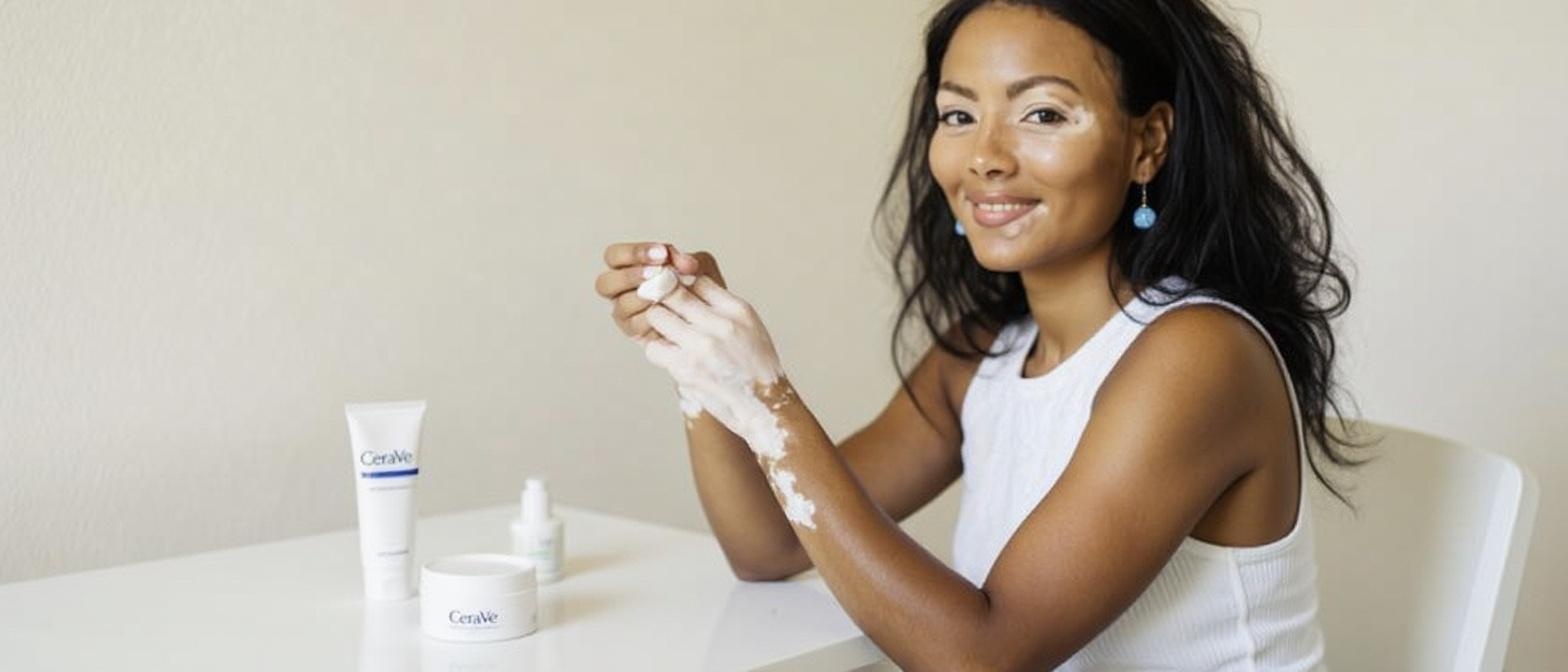

Beth Childs
Writer & Advocate Living With Vitiligo
CeraVe Moisturizing Cream
A genuine workhorse. The ceramide-rich formula rebuilds the skin barrier effectively, and the price point makes it easy to apply generously without rationing it. The go-to recommendation from dermatologists for vitiligo patients.
Affiliate disclosure: if you buy through links on this page, the site may earn a small commission at no extra cost to you.
Moisturizing might sound basic, but for vitiligo skin it's genuinely therapeutic. A damaged skin barrier can trigger the Koebner response - where new patches form at sites of irritation. The right moisturizer keeps your barrier intact, reduces inflammation, and creates the best possible environment for repigmentation treatments to work.
Why This Matters for Vitiligo
Vitiligo-affected skin often has a compromised barrier function, even if it doesn't look or feel dry. Studies show that depigmented patches lose transepidermal water faster than surrounding skin. A good moisturizer restores that barrier, reduces the risk of Koebnerization from friction and dryness, and can even enhance the effectiveness of topical treatments like tacrolimus.
How We Selected These Products
Barrier Repair
We prioritized ceramide-rich and lipid-replenishing formulas that actively restore the skin barrier rather than just sitting on top.
Zero Irritants
Fragrance, essential oils, and common sensitizers are excluded. Vitiligo skin - especially active borders - is highly reactive.
Treatment Compatibility
Moisturizers must layer well under or over topical treatments (tacrolimus, corticosteroids, JAK inhibitors) without pilling or interference.
Non-Comedogenic
Heavy occlusive formulas can cause breakouts, especially on facial vitiligo. We tested for pore-clogging potential.
Quick Comparison
| Product | Rating | |
|---|---|---|
| Top Pick CeraVe Moisturizing Cream | ★ 4.8 | Read review ↓ |
| Best for Ultra-Sensitive Skin Vanicream Moisturizing Skin Cream | ★ 4.7 | Read review ↓ |
| Best Post-Treatment La Roche-Posay Cicaplast Baume B5+ | ★ 4.6 | Read review ↓ |
Detailed Reviews
CeraVe Moisturizing Cream
Who This Is Best For
Daily full-body moisturizing for vitiligo patients. Ceramide-rich formula rebuilds skin barrier and pairs perfectly with topical treatments.
Don't buy this if…
You have acne-prone facial skin — the thick jar formula is better suited for the body. The jar packaging is also less hygienic for repeat facial use.
✓ Pros
- Contains 3 essential ceramides for barrier repair
- MVE technology provides 24-hour hydration
- Fragrance-free and non-comedogenic
- Affordable enough for generous full-body application
- Dermatologist-recommended for sensitive skin conditions
✗ Cons
- Thick texture may feel heavy in humid climates
- Plain jar packaging isn't the most hygienic
- No added anti-inflammatory ingredients
Our Verdict
A genuine workhorse. The ceramide-rich formula rebuilds the skin barrier effectively, and the price point makes it easy to apply generously without rationing it. The go-to recommendation from dermatologists for vitiligo patients.
Vanicream Moisturizing Skin Cream
Who This Is Best For
Patients with active Koebnerization or extremely reactive skin. The cleanest ingredient list available in a drugstore moisturizer.
Don't buy this if…
You need ceramide-based barrier repair — Vanicream moisturizes but lacks the lipid-replenishing ingredients of CeraVe. It does one job and nothing more.
✓ Pros
- Free of dyes, fragrance, lanolin, parabens, and formaldehyde
- Dermatologist-tested for the most sensitive skin
- Excellent base layer under prescription topicals
- Very affordable for daily use
✗ Cons
- No ceramides or advanced barrier-repair ingredients
- Can feel slightly greasy until fully absorbed
- Basic formula - no antioxidant or anti-inflammatory extras
Our Verdict
The right choice for reactive or flaring skin. When standard moisturizers sting, Vanicream's ultra-clean formula moisturizes without irritating - it does one job and does it perfectly.
La Roche-Posay Cicaplast Baume B5+
Who This Is Best For
Recovery after phototherapy, laser sessions, or topical treatment irritation. Healing balm that calms and repairs stressed skin.
Don't buy this if…
You want an everyday all-over moisturizer — this is too heavy for daily full-body use and the zinc creates a white cast on darker surrounding skin.
✓ Pros
- Panthenol (B5) and madecassoside promote skin healing
- Provides protective barrier over treated skin
- Proven to reduce redness and irritation
- Works on both face and body
✗ Cons
- White cast from zinc - not ideal as a daytime facial moisturizer
- Too heavy for oily skin types as a daily moisturizer
- Best used as a targeted treatment, not all-over
Our Verdict
The go-to recovery balm after phototherapy sessions. Panthenol and madecassoside calm post-treatment redness immediately, and research supports keeping skin calm during the repigmentation process. A staple for anyone doing regular UVB treatments.
Beth's Take
Don't underestimate moisturizer. Research confirms that vitiligo-affected skin has impaired barrier function - and a compromised barrier makes every other treatment less effective. A practical protocol: a ceramide-rich cream daily, an ultra-sensitive formula for reactive days, and a healing balm after phototherapy. Layer prescription topicals on slightly damp, freshly moisturized skin for better absorption.
Frequently Asked Questions
Related Reviews
Best Sunscreen for Vitiligo
Protecting depigmented skin requires more than a high SPF number. Here are the sunscreens that provide the best protection for vitiligo patches - without the white cast that makes them more visible.
ConcealerBest Concealer for Vitiligo
Sometimes you just want your patches covered. These are the camouflage products that actually deliver - selected based on clinical testing and real-world community feedback.
Vitamin D SupplementBest Vitamin D Supplement for Vitiligo
Vitamin D deficiency is common in vitiligo - and supplementation may support your immune system and repigmentation. Here's what the research actually says.
About Beth Childs
Writer & Advocate · 10+ Years Living with Vitiligo
Beth has spent over a decade reading vitiligo research, comparing treatment options, and sharing her personal journey. Every article is grounded in published research and filtered through lived experience. She is not a doctor - she's the knowledgeable companion you wish you had from day one.
Read Beth's Full Story →