
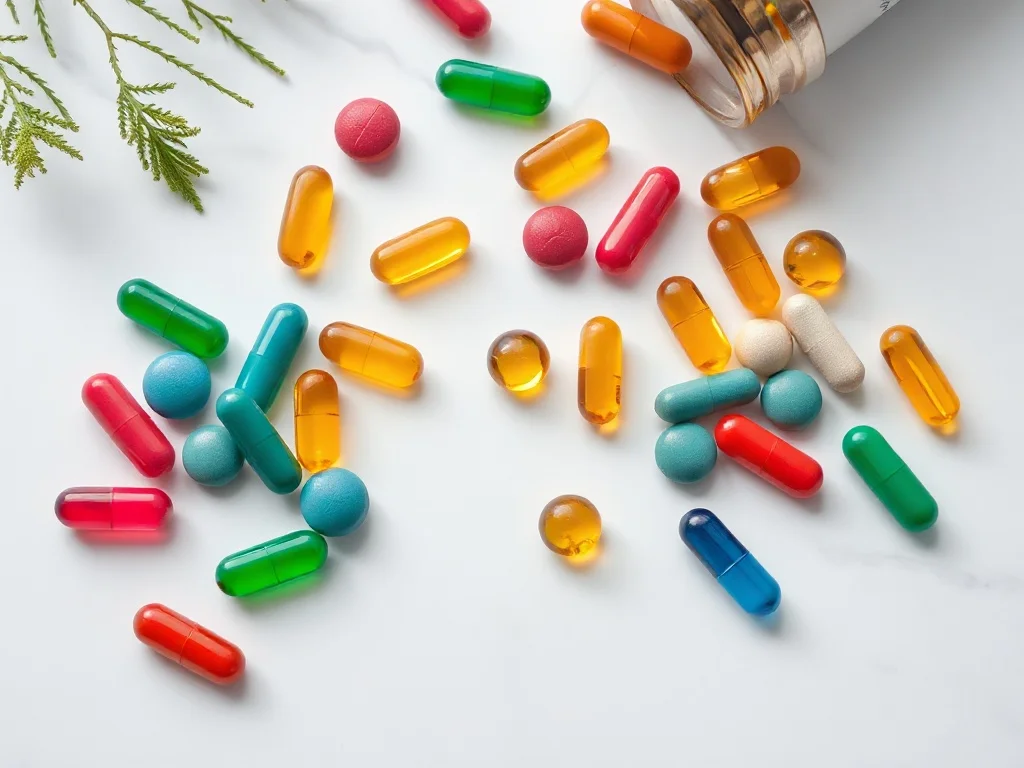
Melanin Supplements for Vitiligo — Do They Actually Work?
Melanin Supplements for Vitiligo — Do They Actually Work?
The phrase “melanin supplement” gets searched thousands of times a month by people with vitiligo who are hoping for something straightforward: take a pill, restore pigment. It is an understandable hope. It is also not how melanin production works in vitiligo.
This is not a dismissive article. There are supplements with real, if modest, evidence in vitiligo. There are others that are pure marketing. This page explains the difference clearly.
Quick answer
No supplement restores melanin directly — melanin is made inside melanocytes, and you cannot swallow pigment molecules that reach your skin. What research does support is correcting specific nutrient deficiencies (especially vitamin D, B12, and folate) that are more common in vitiligo patients. These support the conditions for repigmentation; they do not cause it.
Why “melanin supplements” are not a category that exists
Melanin is a pigment produced inside melanocytes — the cells that give skin its colour. You cannot swallow melanin and have it travel to your skin. Melanin molecules do not cross the gut wall and migrate to skin cells. Products labelled “melanin supplement” or “melanin booster” are either selling tyrosine (an amino acid precursor), antioxidants, or nothing of relevance.
The actual problem in vitiligo is not a shortage of melanin building blocks. It is that the immune system destroys the melanocytes that make melanin. Any intervention that does not address the immune component is addressing the wrong problem.
That said, some nutritional deficiencies do appear consistently in vitiligo patients, and correcting them has evidence behind it.
What actually has evidence
Vitamin D
Vitamin D deficiency is significantly more common in vitiligo patients than in the general population. Multiple studies have found an association between low vitamin D levels and disease activity and extent.
Supplementation at 1,000–4,000 IU/day is reasonable if you are deficient. Getting tested first (25-OH vitamin D blood test) tells you whether you actually need it and at what dose. Vitamin D3 supplements are widely available and inexpensive.
Evidence level: Moderate. Association with vitiligo is consistent; direct repigmentation from supplementation alone is modest.
Vitamin B12 + folic acid + sun exposure
This is probably the best-studied supplement combination in vitiligo specifically. A Swedish study found that B12 + folic acid supplementation combined with sun exposure produced repigmentation in a meaningful proportion of patients after 3–6 months. Sun exposure was a required component — the combination without sun had much weaker effects.
The mechanism is related to homocysteine metabolism and antioxidant pathways rather than melanin production directly.
Evidence level: Moderate. Small study but replicated in other research. The combination with sun exposure is key.
Zinc
Zinc is involved in melanocyte function and has antioxidant properties. Zinc deficiency correlates with worse vitiligo extent in some studies. Supplementation in combination with other treatments (particularly NbUVB) shows modest benefit in some trials.
Zinc levels are easily tested. If you are deficient, correcting it makes sense. Zinc supplementation without deficiency is less well-supported.
Evidence level: Moderate for deficiency correction; weaker for supplementation in people with normal levels.
Alpha-lipoic acid + vitamins C and E (antioxidant combination)
Oxidative stress is elevated in vitiligo patients and may contribute to melanocyte destruction. A combination of antioxidants including alpha-lipoic acid, vitamin C, and vitamin E has been studied alongside NbUVB therapy and shown to improve repigmentation outcomes compared to NbUVB alone.
This is a supportive role, not a standalone treatment. Adding antioxidants while doing phototherapy appears to help; taking antioxidants instead of phototherapy does not.
Evidence level: Moderate when combined with NbUVB. Low as standalone.
Ginkgo biloba
Ginkgo has mild immunomodulatory and antioxidant properties. A small RCT found that 40mg three times daily slowed the progression of vitiligo and produced limited repigmentation over 3 months. It is not dramatically effective but has a reasonable safety profile.
Evidence level: Low-to-moderate. Not a primary treatment but sometimes added as a complement.
What does not have evidence
“Melanin capsules” and “skin pigmentation boosters”: These are marketing terms, not medical categories. Most contain tyrosine (see below), antioxidants, and sometimes copper, none of which reliably restores melanin in vitiligo.
Tyrosine: Tyrosine is an amino acid used in the melanin synthesis pathway. The logic of supplementing it is that more substrate = more melanin. The problem is that substrate supply is not the limiting factor in vitiligo — the melanocytes themselves are gone or suppressed. No clinical evidence supports tyrosine supplementation for vitiligo repigmentation.
Copper: Copper is involved in tyrosinase (the enzyme that converts tyrosine to melanin). Copper supplementation is sometimes marketed for vitiligo. No adequate clinical trials support it, and copper toxicity is a real risk at high doses.
Melatonin, collagen boosters, “stem cell activators”: No evidence in vitiligo. These are often bundled with vague skin-health claims that do not translate to melanocyte restoration.
What I would actually take
If I were building a supplement stack as support alongside medical treatment (not instead of it), I would:
- Get tested first: 25-OH vitamin D, B12, zinc, and ferritin. Correct actual deficiencies first.
- Take vitamin D3 at 2,000 IU/day if levels are low-normal or deficient.
- Take vitamin B12 and folic acid — particularly if combining with sun exposure or NbUVB.
- Consider ginkgo biloba at 40mg three times daily as a low-risk complement.
- Not spend money on anything labelled “melanin supplement,” “melanin booster,” or “pigmentation capsule.”
If levels are low-normal or deficient
Vitamin D3 (2,000 IU)
Correct an actual tested deficiency first — supplementing without testing is guessing at a dose you may not need.
Check Price on AmazonIf combining with sun exposure or NbUVB
Vitamin B12 + Folic Acid
The best-studied supplement combination in vitiligo specifically — most effective alongside sun exposure or phototherapy, not as a standalone.
Check Price on AmazonThe bigger point: supplements are a complement to treatment, not a substitute. The vitamin cluster (vitamins and evidence levels for vitiligo) explains each one in more detail.
The supplement vs treatment distinction
The honest framing is this: supplements correct deficiencies and reduce oxidative load. They do not shut down the autoimmune attack on melanocytes, which is what ruxolitinib, tacrolimus, and corticosteroids are doing. You can have normal vitamin D and still have rapidly progressing vitiligo. You can have perfect nutrition and still need phototherapy.
Supplements support the environment for repigmentation. Prescription treatments and phototherapy actually drive it.
Related reading:
