
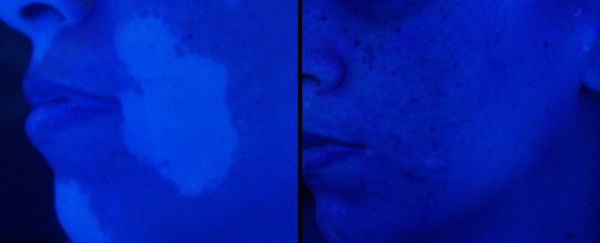
Using a Wood's Lamp to Detect Vitiligo
A Wood’s lamp examination is one of the simplest tools dermatologists use when they want a closer look at pigment changes in the skin. It can be especially helpful when vitiligo is subtle, early, or hard to distinguish from other causes of light patches.
What a Wood’s lamp is
A Wood’s lamp is a handheld ultraviolet light used in a dark room. Under that light, areas of pigment loss may appear more clearly than they do in ordinary daylight. Dermatologists use it for several skin questions, including pigment disorders and some infections.
For vitiligo, it is useful because it can make the borders of depigmented skin easier to see.
What a Wood’s lamp can help with
A Wood’s lamp may help your clinician:
- confirm that a pale area is truly depigmented rather than just lighter than the surrounding skin
- see the edges of a patch more clearly
- spot subtle lesions that are harder to notice with the naked eye
- compare progress over time during treatment
That makes it a useful part of the exam, especially for fairer skin tones where contrast can be harder to appreciate in normal room light.
What it cannot do on its own
A Wood’s lamp is not a complete diagnosis by itself. Your dermatologist may still look at:
- your history
- the pattern of the patches
- symptoms like itching or scale
- other possible causes of light or white areas
In some cases, additional tests or follow-up are still needed.
What the exam is like
The test is usually straightforward:
- The room is darkened.
- The lamp is held close to the skin.
- Your clinician looks at how the patches appear under ultraviolet light.
You may be asked not to wear makeup, sunscreen, perfume, or creams on the area before the exam, because products on the skin can change how the light behaves and make the result harder to interpret.
Can you use one at home?
Some people buy Wood’s lamps for home use, but I would treat them as a curiosity, not a replacement for diagnosis. It is easy to misread what you see, especially if you are anxious and comparing subtle color changes in a bathroom mirror.
If you suspect vitiligo, a proper dermatology evaluation is still the better next step.
My take
Wood’s lamp exams are helpful because they are simple, quick, and often clarifying. But like most vitiligo tools, they are best understood as one part of a bigger picture rather than a magic answer by themselves.
If you are in the “Do I really have vitiligo?” stage, these pages may help next:
