
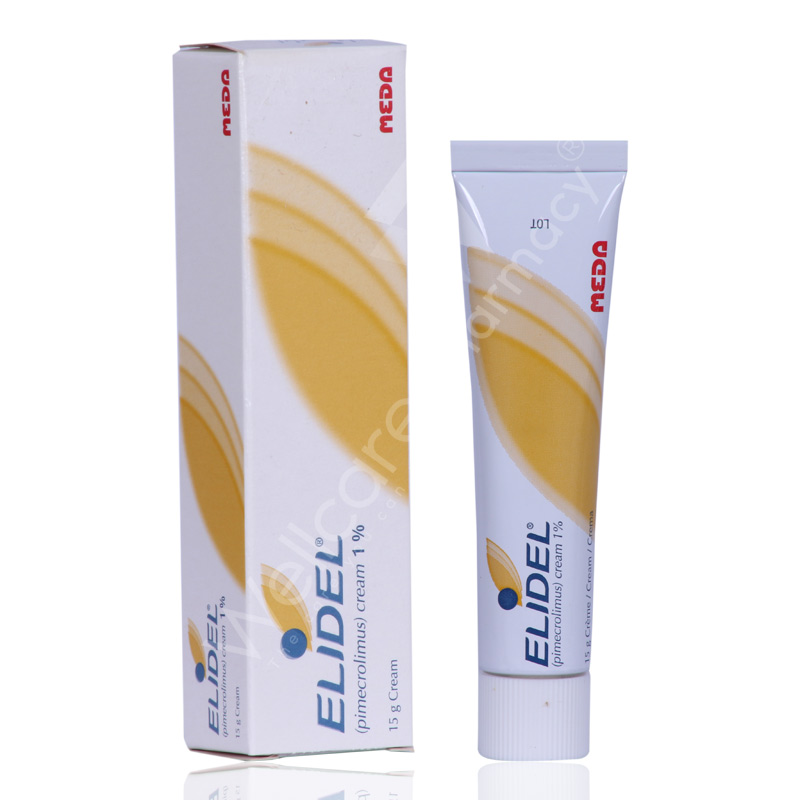
Elidel Cream for Vitiligo: How Pimecrolimus Works and When Dermatologists Use It
Elidel is not a household name the way steroids are, but dermatologists reach for it in situations where steroids are exactly what you want to avoid. If your patches are on your face, eyelids, or other delicate skin — and long-term steroid use feels risky — Elidel (pimecrolimus) is often the prescription that comes next.
Here is what it actually does, where it fits in a treatment plan, and how it compares with tacrolimus, which is the other calcineurin inhibitor you will almost certainly hear about in the same appointment.
What pimecrolimus is and how it works
Pimecrolimus is a calcineurin inhibitor — the same drug class as tacrolimus, though a different molecule. It works by suppressing T-cell activation in the skin.
In vitiligo, the immune system mistakenly destroys melanocytes, the pigment-producing cells in the skin. Calcineurin inhibitors interfere with that immune attack by blocking calcineurin, an enzyme needed to activate the inflammatory signals that drive melanocyte destruction.
This is also why calcineurin inhibitors are sometimes called topical immunomodulators: they do not suppress immunity broadly the way oral immunosuppressants do. The effect is local and relatively targeted.
That mechanism makes pimecrolimus theoretically well suited for vitiligo — especially in the early or active phase, when the immune attack is ongoing and patches are still spreading.
Why dermatologists prefer it for sensitive areas
The reason Elidel comes up specifically for the face, neck, and eyelids is about what it avoids, not just what it does.
Topical corticosteroids are effective for vitiligo, but long-term use on the face carries real risks:
- skin thinning (atrophy)
- perioral dermatitis
- telangiectasia (visible small blood vessels)
- increased sensitivity and rebound inflammation
For body patches, those risks are manageable with careful cycling and potency choices. For the face — and especially around the eyes — dermatologists get much more cautious. Pimecrolimus and tacrolimus offer immune suppression without the atrophy risk, which is why they appear so often in facial vitiligo discussions.
Elidel vs tacrolimus: the head-to-head comparison
Both are calcineurin inhibitors. Both are used for vitiligo on sensitive areas. The main differences are concentration, vehicle, and strength of evidence:
| Elidel (pimecrolimus 1%) | Protopic (tacrolimus 0.03% / 0.1%) | |
|---|---|---|
| Drug class | Calcineurin inhibitor | Calcineurin inhibitor |
| Vehicle | Cream | Ointment |
| Potency | Milder | Stronger (tacrolimus is ~10–100× more potent) |
| Best for | Mild cases, face, children | More active or resistant patches |
| Vitiligo evidence | Moderate | Stronger (more published trials) |
| Common side effect | Mild burning/warmth initially | More pronounced initial burning |
| FDA status for vitiligo | Off-label | Off-label |
The practical upshot: tacrolimus tends to have slightly better repigmentation rates in the published evidence, but pimecrolimus has a gentler side-effect profile. Dermatologists sometimes start with Elidel in younger patients or for very sensitive sites, then switch or combine if results are slow.
Neither is wrong. The choice depends on your skin, your location, and what you can tolerate consistently.
What the clinical evidence shows
Several small studies and reviews have examined pimecrolimus in vitiligo:
- A comparison study found both pimecrolimus and tacrolimus superior to placebo for facial vitiligo repigmentation, with tacrolimus showing slightly higher response rates
- Studies specifically on childhood vitiligo show good tolerability and meaningful repigmentation in some patients, particularly on the face
- Combination approaches — pimecrolimus alongside narrowband UVB — tend to outperform either therapy alone
- The face responds better than the hands, feet, or bony prominences, because those areas have fewer hair follicles (which are the reservoirs from which repigmentation usually starts)
The honest summary: Elidel can work, works best on the face, works better in combination with phototherapy, and should not be expected to produce dramatic results quickly on acral sites.
How to use it correctly
Elidel is applied as directed by your dermatologist — typically once or twice daily to affected patches. The key practical points:
Consistency matters more than anything else. Calcineurin inhibitors work through cumulative immune modulation. Skipping applications regularly breaks the effect.
The burning phase is normal, temporarily. Most patients feel warmth, itching, or mild burning in the first week or two. This usually settles as the skin adjusts. If it is severe or does not improve, tell your dermatologist.
Sunscreen is non-negotiable. Pimecrolimus is used on areas exposed to sunlight. The FDA includes a warning about avoiding UV exposure on treated skin. Daily sunscreen — SPF 40+ on the face — is not optional when using any topical immunomodulator.
Think in months, not weeks. Repigmentation through calcineurin inhibitors is gradual. The first visible changes — often perifollicular dots of pigment — usually appear after 2–3 months. Meaningful coverage takes longer.
When Elidel is combined with phototherapy
For many patients, the most effective protocol is not Elidel alone but Elidel + narrowband UVB. The phototherapy stimulates melanocytes to migrate from hair follicles, while the immunomodulator protects them from immune attack.
If you are using a home narrowband UVB lamp, you would typically apply Elidel on treatment days and continue it on non-treatment days as well. Your dermatologist should guide the specific protocol.
Home narrowband UVB options — the kind used for facial and body patches — can make combination therapy feasible without going to a clinic three times a week.
When it may not be the right choice
Elidel is less likely to help when:
- patches are on the hands, feet, or fingers (low hair follicle density)
- vitiligo is stable and not active (the immune suppression rationale is weaker)
- patches are widespread and would require large surface areas of application
- you are looking for faster results than a topical can deliver
In those situations, a dermatologist may move toward systemic treatment (mini-pulse steroids, ruxolitinib), phototherapy, or combination approaches.
Beth’s take
Elidel occupies a specific niche: it is the gentler prescription calcineurin inhibitor, preferred for the face and for patients who cannot tolerate stronger options. It is not the most powerful tool in vitiligo treatment, but in the right situation — active facial vitiligo in a patient who wants to avoid steroids — it is a reasonable first step.
If your dermatologist has prescribed it, use it consistently, protect the skin from UV, and give it at least 3 months before drawing conclusions. If you have not discussed it yet and you have facial patches, it is worth asking whether it fits your case.
For related reading:
