
Is Vitiligo an Autoimmune Disease? What That Actually Means
Yes — vitiligo is an autoimmune disease. This is not disputed in the dermatological and immunological literature; it is established science. Understanding what “autoimmune” specifically means in vitiligo’s case is genuinely useful: it explains why the condition behaves as it does, why it clusters with other autoimmune diseases, and why the treatments that work for it — JAK inhibitors, calcineurin inhibitors, phototherapy — make mechanistic sense.
What “autoimmune” means
The immune system’s job is to identify and destroy pathogens — viruses, bacteria, foreign cells — while leaving the body’s own tissues alone. It does this through a sophisticated recognition system that distinguishes “self” (your own cells) from “non-self” (pathogens and foreign material).
Autoimmune disease occurs when this recognition system fails — when the immune system incorrectly identifies some component of the body’s own tissue as a threat and mounts an attack against it. In autoimmune thyroid disease, it attacks thyroid cells. In type 1 diabetes, it attacks insulin-producing cells. In vitiligo, it attacks melanocytes — the cells in the skin and hair follicles that produce pigment.
The vitiligo immune mechanism
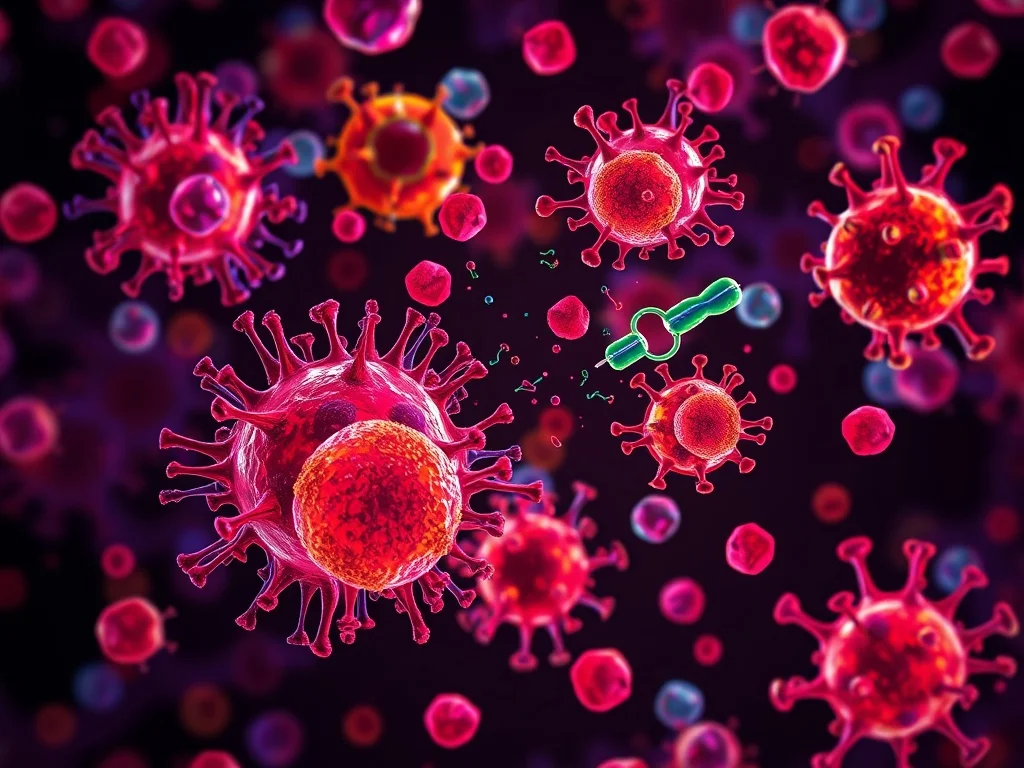
The key immune cells driving vitiligo are CD8+ cytotoxic T cells — a class of immune cells designed to kill other cells that have been infected by viruses or otherwise marked as foreign. In vitiligo, these cells are misdirected to attack melanocytes.
The sequence:
- Something triggers initial melanocyte stress or damage — possibly UV damage, oxidative stress, or skin trauma
- Damaged melanocytes release molecular signals that activate dendritic cells (immune surveillance cells in the skin)
- Dendritic cells present melanocyte-derived proteins to T cells in a way that activates them against melanocytes
- Activated CD8+ T cells enter the skin and kill melanocytes — causing depigmentation
- This process is self-amplifying: dying melanocytes release more signals, activating more T cells
A critical signalling molecule in this cycle is interferon-gamma (IFN-γ). Interferon-gamma activates the JAK1 and JAK2 proteins (Janus kinases), which carry the inflammatory signal forward via the STAT pathway. This JAK-STAT signalling is what JAK inhibitor treatments block — cutting off the inflammatory signal before it can sustain and amplify the T cell attack on melanocytes.
Why this explains the treatments
Understanding the mechanism explains why specific treatments work:
Opzelura (ruxolitinib cream): Ruxolitinib blocks JAK1 and JAK2. Applying it to vitiligo patches interrupts the interferon-gamma signalling that sustains the autoimmune attack. With the attacking signal disrupted, surviving melanocytes are no longer destroyed and can begin to repopulate the patch.
Tacrolimus: Blocks calcineurin, which is required for T cell activation. This reduces the ability of the CD8+ T cells to sustain their attack on melanocytes. A different target but the same end result — less immune pressure on melanocytes.
Narrowband UVB phototherapy: Has a more complex dual action. UV light suppresses local T cell activity in the treated skin (providing immunosuppression) while simultaneously stimulating remaining melanocytes to proliferate and migrate into the patch. Phototherapy addresses both the immune side and the melanocyte side of the equation.
Why corticosteroids work briefly but not long-term: Corticosteroids are broad immunosuppressants — they reduce inflammation and T cell activity but through a non-specific mechanism with significant side effects from long-term use. Short-course steroids can suppress active vitiligo spread, but long-term steroid use produces skin atrophy and other problems that limit their role.
Why the autoimmune label matters for co-morbidities
The shared genetic susceptibility underlying autoimmune diseases explains why vitiligo clusters with other autoimmune conditions — particularly thyroid disease, alopecia areata, and type 1 diabetes. The same genes that regulate immune tolerance are involved in all of these conditions.
Knowing that vitiligo is autoimmune should prompt screening for other autoimmune conditions — a simple blood panel including thyroid function and antibodies at minimum. It also provides context for why major stressors, certain medications, or immune-activating events can trigger vitiligo spread: they perturb the immune environment in ways that lower the threshold for autoimmune activity.
What the autoimmune mechanism does not mean
It does not mean vitiligo is related to infection. Autoimmune disease is immune attack on self, not immune defence against a pathogen. Vitiligo is not infectious in any sense — not caused by a virus or bacteria, not transmissible, not a response to any external contamination. The common vitiligo misconceptions guide addresses the contagion question directly.
It does not mean the immune system is “weak.” Autoimmune disease reflects a specific miscalibration of immune recognition, not overall immune deficiency. Vitiligo patients are not more susceptible to infections or cancers because of vitiligo itself.
It does not mean diet caused it or can cure it. While gut microbiome and diet research is interesting and ongoing, vitiligo is caused by genetic predisposition plus immune triggers — not by any specific food or nutritional deficiency. Diet optimisation may support overall health and possibly reduce some inflammatory burden, but it is not mechanistically equivalent to treatments that directly block the autoimmune attack.
The treatment bottom line
Understanding vitiligo as an autoimmune disease with a specific, characterised mechanism gives reason for optimism: we know precisely what to target. JAK inhibitor therapy — which was in clinical trials just ten years ago — is now an approved treatment. Oral JAK inhibitors in trials, including upadacitinib, show substantially higher repigmentation rates than topical-only approaches. The mechanistic understanding is directly enabling better treatments.
The vitiligo treatment options comparison covers the full current landscape.
