
Opzelura on Hands and Feet: Why Results Are Different (and What Actually Helps)
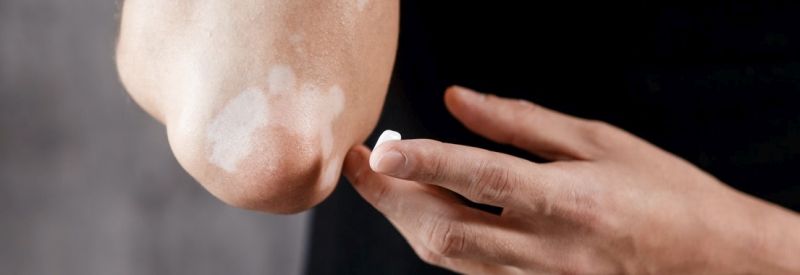
If you have been using Opzelura (ruxolitinib cream) on your hands and feet and seeing much less result than you expected, you are not imagining it. Acral vitiligo — patches on the hands, feet, and fingertips — is the most treatment-resistant location for almost every therapy available. This is not a flaw in the drug. It is a feature of the biology.
Understanding why helps you set realistic expectations and choose the right combination strategy rather than waiting months for results that are unlikely to materialise on their own.
Why hands and feet respond so differently
Ruxolitinib cream works by blocking the JAK-STAT signalling pathway that drives immune attack on melanocytes. The drug does its job in acral areas too — the inflammation comes down. The problem is the second step: repigmentation requires melanocytes to migrate back into the depigmented area and restart producing melanin.
In acral areas, three things work against this:
Melanocyte reservoir is depleted. Repigmentation comes from two sources: melanocytes surviving in hair follicles within the patch, and melanocytes migrating in from the edges. On glabrous (hairless) skin — palms, soles, fingertips — there are no hair follicles. The follicular reservoir that makes facial repigmentation faster simply does not exist in these areas.
Skin is thicker. The stratum corneum (outer skin layer) on palms and soles is 10–20 times thicker than facial skin. Drug penetration is significantly reduced even with consistent application. You need more cream, applied more carefully, for longer.
UV dose requirements are higher. If you are doing combination therapy with narrowband UVB, acral skin requires higher doses to achieve the same biological effect as thinner skin elsewhere. Under-dosing on the hands and feet is a common mistake in home phototherapy.
What the trial data shows
In the Phase 3 TRuE-V clinical trials for ruxolitinib, facial repigmentation was the primary endpoint — and results were good (about 30% of patients hit the 75% improvement mark at 24 weeks). Body site data was secondary and less consistent.
Real-world experience in the r/Vitiligo community, analysed in a 2025 infodemiology study of 2,950 posts, confirms the same pattern: facial success stories dominate. Hands and feet are the location most commonly described as “not responding” or “barely moving.”
This does not mean zero response. Some patients see partial improvement at 12–18 months with optimised combination therapy. But the timeline and the final percentage of repigmentation are both lower for acral sites.
Combination strategies that give acral vitiligo the best chance
Ruxolitinib alone has a low ceiling for hands and feet. The combinations that have the most evidence behind them:
Ruxolitinib + narrowband UVB
This is the best-supported combination for any vitiligo site, including acral. The cream reduces immune activity; the UVB light stimulates residual melanocytes and recruits melanocytes from patch edges.
For home phototherapy on hands and feet specifically:
- Use a handheld UVB device that lets you target the hands accurately without exposing the whole body unnecessarily
- Start at a low MED and increase more gradually than you would for facial skin — palms and soles are more reactive to burns
- Apply ruxolitinib cream after your UVB session, not before
- Treat 3 times per week minimum — twice weekly is often insufficient for acral sites
For targeted acral treatment
Kernel KN-4003BL UVB Lamp
Lets you target hands and feet accurately without exposing the whole body unnecessarily — useful for combination therapy on acral sites.
Check Price on AmazonThe narrowband UVB at home guide has the full protocol, including dosing progression.
Excimer laser (308nm)
Excimer laser delivers a targeted, high-intensity UVB dose directly to the patch. For discrete, well-defined patches on the hands or feet, excimer can be more effective than broadband home UVB because the dose concentration is higher. This is clinic-based and requires dermatologist access, but worth asking about specifically if your patches are small and localised.
Topical corticosteroids in rotation
Some dermatologists cycle tacrolimus and a mid-potency corticosteroid on acral sites because the two mechanisms complement each other. Corticosteroids reduce inflammation quickly; tacrolimus maintains the effect without the skin-thinning risk of long-term steroid use. Ruxolitinib can replace tacrolimus in this rotation for patients who can access it. Discuss rotation schedules with your dermatologist — this is not something to self-manage without guidance.
Practical application tips for acral sites
Hands and feet need a different approach than face:
- Apply more. The FDA-approved dose guidance says a thin layer, but for palms and soles, “thin layer” means ensuring full coverage — these areas are larger and the skin is thicker. Don’t skip the webbing between fingers.
- Occlude if possible. Wrapping treated hands loosely in cotton gloves overnight increases absorption. Some dermatologists recommend this for 1–2 nights per week. Ask yours first.
- Be consistent for longer. Expect a minimum of 6 months before assessing results on hands and feet — 3 months is too early to conclude it’s not working.
- Protect from sun between sessions. If you are using UVB therapeutically, you still need broad-spectrum sunscreen on non-treatment days. Uncontrolled sun exposure can trigger Koebner phenomenon in active vitiligo.
When to have the honest conversation
If you have been using ruxolitinib on your hands and feet for 9–12 months with consistent UVB combination and are seeing minimal improvement, that is useful information, not a failure. Some acral vitiligo — particularly long-standing patches on hairless glabrous skin — has a genuinely low repigmentation ceiling with current therapies.
This is worth discussing with your dermatologist openly. Options at that point include:
- Accepting the current state and focusing on concealment — cosmetic camouflage designed for hands and feet is better than it used to be
- Depigmentation of the surrounding skin on hands (Benoquin) if vitiligo is extensive — a significant decision but one that dermatologists do recommend for appropriate cases
- Watching for newer systemic JAK inhibitors (oral ruxolitinib, upadacitinib) in clinical trials — systemic delivery reaches acral sites more effectively than topical application
The goal is a realistic plan, not continued application of a treatment with a low probability of meaningful result in your specific area.
My take
Hands and feet with vitiligo is one of the most honestly difficult situations to be in — not because treatment options don’t exist, but because the biology genuinely stacks against you in those locations. What I would do is commit to the ruxolitinib plus UVB combination properly (both consistently, for at least a year), manage expectations month by month rather than hoping for a breakthrough, and make sure my dermatologist understands I’m measuring by location, not overall body response.
For more context on ruxolitinib generally and how it compares to tacrolimus:
