
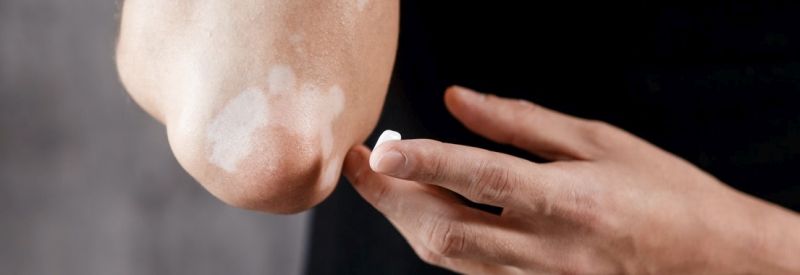
Ruxolitinib Cream for Vitiligo: Promising, Prescription-Only, and Not for Everyone
Ruxolitinib cream is one of the most talked-about prescription treatments in vitiligo right now, and unlike many things people search for, there is a real reason for the interest.
That said, “promising” is not the same thing as “simple,” and it definitely is not the same thing as “guaranteed.”
Why it matters
Ruxolitinib is a topical JAK inhibitor. In vitiligo, that matters because it targets part of the inflammatory signaling believed to contribute to pigment loss. For some patients, especially in the right locations and with the right expectations, it can be a meaningful option.
This is a much stronger evidence category than most supplements or alternative remedies. But it still has limits.
What patients should expect
The most realistic expectation is:
- it is prescription treatment, not an over-the-counter fix
- it may help some patients more than others
- it usually takes time
- your dermatologist still has to decide whether you are a good candidate
It is better to think of ruxolitinib cream as an important tool than as the answer to every vitiligo case.
What still needs caution
Even when a treatment is genuinely promising, it deserves careful framing. Patients still need to think about:
- how much body surface area is involved
- how long treatment may be needed
- cost and access
- whether combination treatment makes more sense than one cream alone
That last point matters a lot. In vitiligo, combination approaches often outperform single-treatment thinking — and regardless of which prescription route you take, daily sun protection and a skin barrier moisturizer should run in parallel.
Safety and supervision
Because this is a prescription immune-modifying treatment, it should sit inside a dermatologist-guided plan. If someone is trying to compare it with older topical options, this is where the conversation usually gets more useful:
- Is the vitiligo stable or active?
- Is the face involved?
- Are there better first-line options for this location?
- Would narrowband UVB or tacrolimus make more sense first?
Those are better questions than “Does this cream work?”
My take
Ruxolitinib cream is one of the few newer vitiligo treatments that deserves real attention. I just would not oversell it. The right tone here is hopeful but grounded.
Pipeline: what comes after ruxolitinib
Beyond ruxolitinib, two topical agents are in active trials for vitiligo. Roflumilast 0.3% cream (Arcutis Biotherapeutics) completed a Phase 2 trial in 2025 with positive repigmentation data — a Phase 3 trial is expected to begin in 2026. Ritlecitinib (Litfulo), already FDA-approved for alopecia areata, completed Phase 3 in vitiligo in early 2026. Neither is yet approved for vitiligo, but they represent the next wave of targeted topical and oral options if ruxolitinib is inaccessible due to cost or insurance.
If you are comparing treatment paths, these are the next pages I would read:
- Vitiligo Diagnosis and Treatment
- Narrowband UVB at Home
- Tacrolimus Ointment for Vitiligo
- Opzelura Complete Patient Guide
- Opzelura on Hands and Feet: Why Results Differ
- Opzelura + NbUVB Combination Therapy
- How to Appeal an Opzelura Insurance Denial
- Upadacitinib (Rinvoq) for Vitiligo
- Vitiligo Treatment Options Compared
- Home Phototherapy Safety Guide
- Best UV Lamps for Home Vitiligo Treatment
