
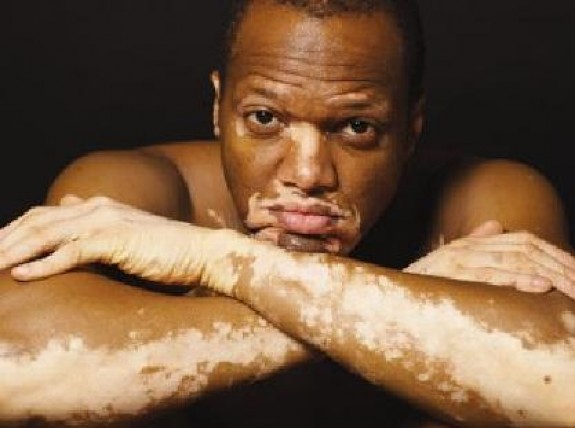
Vitiligo and Mental Health: The Emotional Reality and What Actually Helps
The common dismissal of vitiligo as “just cosmetic” understates what the research shows. Vitiligo carries psychological weight that, in peer-reviewed measurement, sits comparable to psoriasis — a condition no one calls just cosmetic.
This page covers what the evidence actually says about vitiligo and mental health, and what the research suggests actually helps.
What the research shows about psychological impact
The Dermatology Life Quality Index (DLQI) is the standard measure for how skin conditions affect daily life. Studies using DLQI in vitiligo populations consistently find scores in the range of 4–8 — comparable to psoriasis, and meaningfully higher than the general population.
Specific findings from the research:
- Anxiety is found in up to 25% of vitiligo patients in clinical studies, compared to around 8% in general population controls
- Depression affects up to 20% of vitiligo patients in some cohorts
- Social avoidance is reported by a significant proportion of patients, particularly around activities involving exposed skin — swimming, sport, summer clothing
- Occupational impact is documented: some patients change careers, avoid promotion to client-facing roles, or limit job searches based on perceived appearance concerns
- Stigma perception is consistently higher than actual stigma experienced — patients anticipate worse reactions from others than typically occur
The psychological burden is highest in patients with:
- Facial and hand involvement (highest visibility)
- Active, spreading disease (uncertainty is its own stressor)
- Diagnosis in adolescence (identity formation period)
- Darker skin tones where contrast is more visible
None of this means vitiligo is more serious than it is. It means the emotional response is not an overreaction — it is a documented, measurable aspect of what the condition involves.
The appearance anxiety trap
One of the most consistent findings in the visible difference psychology literature is the gap between perceived stigma and actual stigma.
Patients with vitiligo typically anticipate that others will react with disgust, pity, or discomfort. In practice, studies that have looked at actual social reactions find that most people react with curiosity at worst and indifference at best. Children ask direct questions. Adults mostly say nothing.
The psychological cost is often not what actually happens — it is the anticipatory anxiety about what might happen. This distinction matters because it points toward what the intervention should be: not changing other people’s reactions (which are mostly already fine), but changing the relationship with the anticipated reaction.
What has evidence behind it
Cognitive Behavioural Therapy (CBT) for visible difference
CBT adapted specifically for visible skin conditions has the strongest evidence base of any psychological intervention in dermatology. The Changing Faces organisation (UK) and equivalent programmes elsewhere have developed structured CBT approaches specifically for people with disfiguring skin conditions, including vitiligo.
What CBT for visible difference typically addresses:
- Safety behaviours — things you do to avoid or manage feared situations (wearing long sleeves in summer, avoiding swimming, deflecting conversations)
- Cognitive distortions — specifically the overestimation of how much attention others pay and how negatively they react
- Social avoidance — graded exposure to feared situations with skills practice rather than avoidance
Does it work? Studies of CBT for visible difference show significant reductions in anxiety, social avoidance, and impact on daily activities. It is not a personality overhaul — it is a set of learnable skills.
Acceptance and Commitment Therapy (ACT)
ACT takes a different approach: rather than trying to change thoughts about appearance, it focuses on clarifying what you actually value and committing to living by those values regardless of how you feel about your appearance on any given day.
In practice for vitiligo: ACT might help someone recognise that they value connection, career, adventure — and then examine whether their current choices (avoiding dating, declining work events, not going swimming with their children) are consistent with those values or being driven by appearance anxiety. The work is about behaviour change, not about feeling better about your appearance first.
Peer connection
Isolation amplifies distress. The research on chronic illness consistently shows that connection with others who share the same condition reduces distress, reduces perceived stigma, and improves coping.
For vitiligo specifically:
- r/Vitiligo on Reddit has an active community with a consistently supportive tone — it is one of the better-moderated chronic condition communities online
- Vitiligo Support International (VSI) runs online forums and some in-person groups
- The Vitiligo Research Foundation (VRF) runs patient advocacy programs and events where patients, advocates, and researchers interact
- Models and public figures with vitiligo — Winnie Harlow, Rashid Johnson, others — have helped shift the cultural frame, particularly for younger patients
You do not need to become an activist or public about your vitiligo. But finding even one or two people who get it without explanation reduces the experience of being alone with the condition.
Camouflage as a confidence tool — not a coping failure
Using cosmetic camouflage to reduce patch visibility is sometimes framed as avoidance, or as not accepting your condition. The evidence does not support this framing.
Studies on camouflage in visible skin conditions show that access to effective camouflage improves psychological wellbeing — it gives people a tool for situations where they want to control visibility (job interviews, weddings, medical appointments where they do not want questions). It reduces the sense of helplessness.
Using camouflage does not prevent acceptance. For many patients it is a practical bridge — something that expands choices while the emotional work of acceptance happens in parallel.
Practically:
- Dermablend Cover Crème has the longest track record for skin condition coverage and comes in a wide shade range
- Self-tanners applied to surrounding skin can reduce contrast without covering patches — Bondi Sands gradual tanner is frequently mentioned in the vitiligo community for this purpose
- Mineral sunscreen on depigmented patches (which is essential anyway for UV protection) provides light coverage as a secondary benefit — EltaMD UV Clear SPF 46 has a slight tint and sits well under makeup
Longest track record for coverage
Dermablend Cover Crème
A wide shade range and a genuine track record for skin condition coverage — a confidence tool for situations where you want to control visibility.
Check Price on AmazonReduces contrast without covering patches
Self-Tanner for Vitiligo
Applied to surrounding skin, gradual self-tanner can soften the visible contrast — frequently mentioned in the vitiligo community for this purpose.
Check Price on AmazonDaily sun protection supports confidence too
Depigmented patches that burn and inflame look more dramatic than protected patches. Consistent daily mineral SPF 50+ on exposed patches keeps them looking their calmest — less red, less raised, less prominent against surrounding skin. This is both a health measure and an appearance management tool.
When to seek professional support
Consider talking to a psychologist if:
- You are regularly avoiding social situations, activities, or opportunities because of your vitiligo
- You spend more than an hour a day thinking about or managing anxiety related to your appearance
- Vitiligo is significantly affecting your relationships, work, or quality of life
- You are experiencing persistent low mood, sleep problems, or loss of interest in things you used to enjoy
Asking for psychological support for vitiligo-related distress is not an overreaction. It is appropriate and evidence-backed. Many dermatology departments have or can refer to psychologists with chronic illness or dermatology experience.
In the UK, IAPT (Improving Access to Psychological Therapies) services can be self-referred for CBT. In the US, a referral from your dermatologist to a health psychologist or licensed therapist with chronic illness experience is the typical starting point.
What does not help
- Being told to “just be confident” — this is not an actionable instruction and implies that people who struggle are choosing to
- Comparing yourself to models with vitiligo who are photographed beautifully — useful for cultural visibility, not useful as a daily self-esteem target
- Trying to hide the condition indefinitely without addressing the anxiety — the patch will be visible at some point; building skills to navigate that is more useful than permanent avoidance
A note on Beth’s own experience
I was diagnosed in 2009. The psychological adjustment took years and it was not linear. I went through a period of very significant social anxiety around my patches, particularly on my hands, before I found a combination of things that helped — understanding that most reactions were in my head, finding community (online initially), and eventually deciding the anxiety cost more than the risk of visibility.
I am not “over it” in a tidy way. I have patches that are still visible and I still have moments. But the quality of daily life is not defined by it anymore. That took time and work — and it was worth both.
If you are in the thick of it, the resources and approaches above are the most evidence-supported ways forward I am aware of.
