
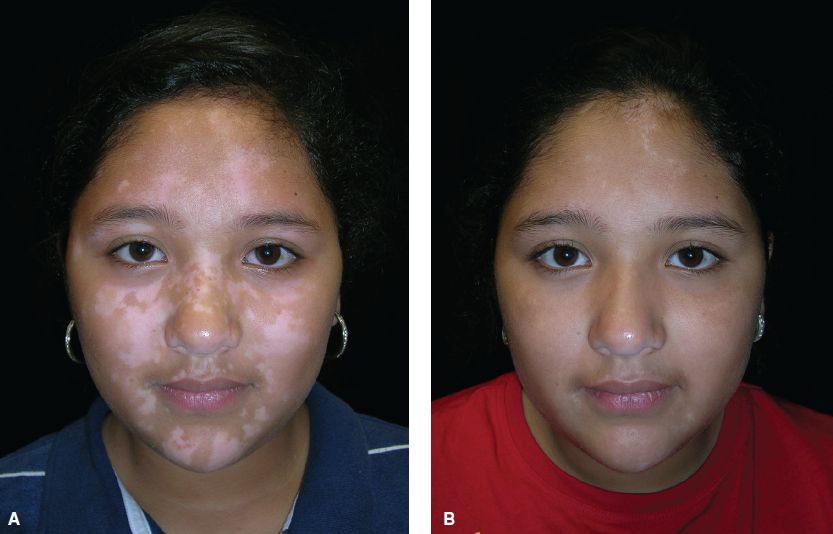
Vitiligo in Children: A Parent's Guide to Treatment, School, and Emotional Impact
Finding white patches on your child’s skin is alarming, and the first appointment with a dermatologist often raises more questions than it answers. This is what parents consistently tell me they wished they had known from the start.
How common is vitiligo in children?
Vitiligo affects approximately 1–2% of the global population, and around 25–30% of cases begin in childhood, most commonly between ages 5 and 12. It is more common in children with a family history of vitiligo or other autoimmune conditions (thyroid disease, type 1 diabetes, alopecia areata).
The important thing to know immediately: vitiligo is not contagious, is not caused by anything your child ate or did, and is not your fault. It is an autoimmune condition — the immune system mistakenly targets melanocytes. No dietary choice or parenting decision causes it.
Types in children
Non-segmental vitiligo (NSV) — the most common type in adults — also occurs in children but affects both sides of the body symmetrically. It is associated with autoimmune activity and can spread over time.
Segmental vitiligo — more common in children than adults. It affects one side of the body and typically progresses quickly for 1–2 years before stabilising. It is less responsive to some treatments but often does not progress further once stable.
When to see a dermatologist
As soon as possible after you notice patches. Early treatment — before patches are fully established and before white hairs (leukotrichia) appear within the patches — generally gives better results. A paediatric dermatologist with experience in pigment disorders is preferable to a general GP for initial evaluation.
At the first appointment, expect:
- Examination with a Wood’s lamp to assess patch extent
- Questions about family history and any recent illnesses or stressors
- Discussion of thyroid function — thyroid autoimmunity is the most common associated condition and worth screening for at diagnosis
- A discussion of treatment options appropriate to your child’s age and patch distribution
Treatment options by age
All ages: topical corticosteroids
Topical corticosteroids (mild to moderate strength) are the first-line treatment for children with small, localised patches. They work by suppressing local immune activity. Results vary — some children see good repigmentation within 3–6 months; others respond minimally.
Important: Long-term or high-potency steroid use on the face or skin folds carries risks of skin thinning. A dermatologist will typically prescribe short courses with breaks rather than continuous use.
All ages: topical calcineurin inhibitors (tacrolimus, pimecrolimus)
Tacrolimus ointment (Protopic) and pimecrolimus cream (Elidel) are effective alternatives to corticosteroids, particularly for the face and skin folds where steroid risks are higher. They suppress local immune activity without skin-thinning effects. Both are used off-label in children under 2 — for older children, the evidence base is well-established.
Ages 4+: narrowband UVB (NbUVB) phototherapy
Narrowband UVB phototherapy is safe and effective in children from early childhood. It is typically done in a dermatology clinic 2–3 times per week. The main practical barrier is access and time commitment — this is often the reason parents explore home phototherapy options. For children who are good candidates, the results can be excellent, particularly for widespread patches.
Ages 12+: Opzelura (ruxolitinib cream)
The FDA approval of Opzelura (ruxolitinib 1.5% cream) in 2022 extends to patients aged 12 years and older. This is the first FDA-approved topical treatment specifically for vitiligo repigmentation and represents a meaningful advance for adolescents.
The pivotal trials (TRuE-V1 and TRuE-V2) showed meaningful repigmentation — particularly on the face — at 24 and 52 weeks. For adolescents with non-segmental vitiligo, especially facial patches, Opzelura is now a legitimate first-line discussion with a dermatologist.
Insurance coverage requires prior authorisation and may require step therapy — evidence of trying corticosteroids or calcineurin inhibitors first. If denied, an appeal is possible. See the insurance appeal guide for the full process.
Does childhood vitiligo go away on its own?
Sometimes — but it is not reliable enough to wait on. Spontaneous repigmentation does occur, particularly in segmental vitiligo that has stabilised. But in most cases of non-segmental vitiligo, patches persist or spread without treatment.
The evidence suggests that early treatment produces better outcomes than watching and waiting. If your child’s patches are small and not in a visible location, a dermatologist may recommend monitoring. If they are on the face, hands, or another psychologically significant area, treatment sooner is generally better.
The emotional picture
The psychological impact of vitiligo in children is well-documented and should not be minimised. Children with visible vitiligo face:
- Questions and staring from peers
- Difficulty in social situations, particularly in activities involving exposed skin (swimming, sport)
- Impact on self-esteem during the identity-forming years
What helps:
- Normalise it at home first. Children take cues from parents. If you treat it as a medical condition being managed rather than a crisis, they will generally follow that frame.
- Give them language. “My immune system is confused and attacking my skin colour. It doesn’t hurt and I can’t spread it to you.” Simple, factual, not dramatic.
- Involve the school. A brief letter to a teacher explaining the condition and asking for support if questions arise is usually well-received. Most teachers are willing to help prevent stigma before it starts.
- Consider psychological support if you see signs of significant anxiety, social withdrawal, or depression. A child psychologist with chronic illness experience can be helpful — this is not an overreaction.
- Connect with community. The Vitiligo Support International and similar patient organisations have family-focused resources and, in some areas, local groups.
Sunscreen is non-negotiable
Depigmented skin has no melanin to absorb UV radiation. Without protection, it burns quickly and significantly. This is both a health concern and an aesthetic one — sunburned patches often temporarily worsen in appearance.
Apply broad-spectrum SPF 30+ to all patches before outdoor exposure. For children, mineral (zinc oxide/titanium dioxide) sunscreens are well-tolerated and safe on young skin.
