
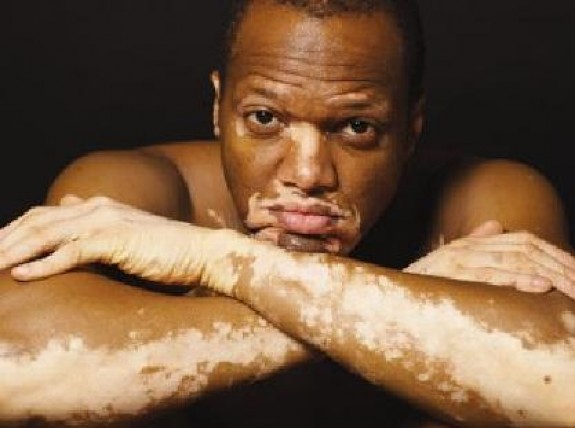
Vitiligo Treatment by Body Area: What Works Where (and Why)
One of the most frustrating things about vitiligo treatment advice online is that it treats all patches the same. “Use tacrolimus.” “Try narrowband UVB.” “Ruxolitinib works.”
None of that is wrong, exactly — but location changes everything. A treatment that produces excellent repigmentation on your face may do almost nothing on your fingertips. A protocol that works on your trunk may be entirely inappropriate around your eyes.
This guide breaks down what actually works by body area, why the skin biology differs by site, and how to calibrate expectations before starting treatment.
Why location matters: the follicular reservoir
The most important concept for understanding site-specific response is the follicular reservoir.
Repigmentation in vitiligo almost always begins perifollicularly — melanocytes migrate out of hair follicles and spread across the depigmented patch. This means that areas with dense, pigmented hair follicles (face, scalp, trunk) respond far better than areas with sparse or absent follicles (palms, soles, fingertips, lips, knuckles).
Other factors that vary by site:
- Skin thickness — thicker skin on the palms and soles reduces topical penetration
- UV penetration — narrowband UVB reaches follicular melanocytes more easily through thinner skin
- Immune microenvironment — acral (extremity) skin has a different cytokine profile than facial skin
- Proximity to blood supply — better-vascularized sites may support melanocyte migration more readily
The result: the face and neck are the highest responders; the hands, feet, and fingertips are the lowest.
By body area
Face — Best overall response
The face is the area where most treatments perform at their best. Dense follicular anatomy, thinner skin, and good vascularization all work in favor of repigmentation.
What works well:
Ruxolitinib cream (Opzelura) — The strongest topical option with Phase 3 RCT data. In the TRuE-V trials, facial patches showed the highest repigmentation rates of any site. Apply twice daily; expect meaningful results in 6–24 weeks.
Tacrolimus (Protopic 0.1%) — Strong evidence for facial vitiligo, particularly perioral and periorbital patches. Outperforms steroids for the face because of zero atrophy risk.
Pimecrolimus (Elidel 1%) — Milder calcineurin inhibitor, often chosen for younger patients or particularly sensitive facial skin. More on Elidel vs tacrolimus here.
Topical corticosteroids — Effective in short cycles (4–6 weeks on, 2–4 weeks off). Potent steroids should not be used on the face continuously due to atrophy risk. Mometasone or clobetasol with careful cycling is common practice.
Narrowband UVB — Works well on the face. Combination with tacrolimus or ruxolitinib tends to outperform either alone.
Excimer laser (308nm) — Excellent for localized facial patches; delivers targeted high-dose UVB directly to the lesion. Typically offered in dermatology clinics.
Realistic timeline: First signs of repigmentation (perifollicular dots) usually appear at 2–4 months. Meaningful coverage at 6–12 months with consistent treatment.
Around the eyes (periorbital) — Calcineurin inhibitors only
Periorbital patches require a different approach because long-term topical steroid use near the eyes carries serious risks: glaucoma, cataracts, and eyelid atrophy.
What to use: Tacrolimus 0.03% or pimecrolimus only. Both are well-tolerated around the eyes and avoid the steroid-related ocular risks.
What to avoid: Potent or even moderate topical corticosteroids with prolonged use near the orbit.
NbUVB can be used on periorbital skin with proper eye protection (UV-blocking goggles).
Scalp — Phototherapy comb + topicals
Scalp vitiligo is underdiagnosed because the hair covers the patches, but it presents as white hair (poliosis) and depigmented skin patches under the hair.
What works:
NbUVB scalp comb — A handheld device that delivers narrowband UVB through parted hair directly to the scalp. The most practical phototherapy approach for scalp vitiligo. Best home UV lamp options including scalp combs →
Topical corticosteroids — Scalp formulations (solution, foam, lotion) penetrate through hair. A potent steroid like clobetasol solution is often first-line, in cycles.
Ruxolitinib — Can be applied to the scalp; Phase 3 data included scalp patches and showed meaningful response.
Practical challenge: Monitoring progress is difficult because hair covers the patches. Serial photos of parted sections help track change.
Neck and trunk — Responds well to NbUVB
The neck and trunk have good follicular density and respond well to both topical and phototherapy approaches.
Practical considerations: Large body surface area patches on the trunk make topical monotherapy less practical (cost, application time). NbUVB — whether home-based or clinic-based — is often the most efficient approach for widespread trunk involvement.
Combination: topical calcineurin inhibitor or ruxolitinib on specific patches + full-body NbUVB for the general coverage.
Arms and legs — Moderate response; varies by proximity to extremities
Proximal locations (upper arms, thighs) respond better than distal (forearms, shins, ankles). The closer to the hands and feet, the sparser the follicular reservoir becomes.
What works: NbUVB, topical steroids, calcineurin inhibitors. Same general approach as the trunk.
What to manage: Large patch areas on the legs can be slow to respond. Set expectations at 6–12+ months for meaningful improvement.
Hands and feet (acral vitiligo) — Most resistant area
Acral vitiligo is consistently the hardest to treat, and this is worth communicating clearly because many patients spend years on treatments that simply lack the follicular reservoir to work.
Why it’s difficult:
- The palmar and plantar skin has virtually no terminal hair follicles — the melanocyte source for repigmentation is absent or minimal
- Skin is thicker, reducing topical penetration
- The immune microenvironment may be more resistant
- UV penetration is lower through thicker stratum corneum
What has the best evidence for acral sites:
Excimer laser (308nm) — Delivers a concentrated, high-dose UVB directly to the patch. Better than broad-beam NbUVB for acral sites because the dose can be higher and more localized. Some clinics report partial responses on dorsal hands (back of hands, which has some follicles) but poor results on palms and fingertips.
Oral JAK inhibitors (upadacitinib/Rinvoq, ritlecitinib) — Systemic JAK inhibition may bypass the follicular requirement to some extent by broadly suppressing the immune attack. Early data on upadacitinib shows some acral improvement, though results are less consistent than on the face.
Ruxolitinib cream — Has shown some acral response in trials, but consistently lower than facial sites. Worth trying on the dorsum of the hand (back of hand, where some follicles exist) rather than the palms.
Surgical options — Autologous melanocyte transplantation (punch grafting, suction blister grafting, or cultured melanocyte transplant) can produce lasting results on stable acral vitiligo. Requires stable disease for 1–2 years and specialist access.
Camouflage — For many patients with hand and foot vitiligo, the most practical strategy is a combination of whatever medical treatment is available plus high-quality camouflage makeup for social situations. This is not giving up — it is recognizing the biological limits of a difficult site while protecting quality of life.
Realistic expectation: Partial improvement on dorsal hands and feet is possible with consistent treatment. Full repigmentation of palms, soles, and fingertips is uncommon with any currently available treatment.
Fingertips and knuckles — Lowest response of all
The fingertips and knuckles combine the worst features: minimal follicular density, maximum mechanical stress on the skin, and frequent Koebner response (new vitiligo triggered by repeated friction).
Even with excimer laser, results are typically limited. Surgical grafting is occasionally considered for cosmetically important fingertip patches.
Practical priority: Protect from further Koebner response (reduce repetitive trauma, use gloves where appropriate), and use camouflage for events where appearance matters. Be cautious about pursuing aggressive medical treatment in a site with poor biological odds.
Lips — Difficult mucosal site
Lip vitiligo is a mucosal surface, which has different biology from keratinized skin. The absence of hair follicles and the unique immune environment makes it resistant to most topical approaches.
What sometimes helps: Excimer laser has shown some success on lip vitiligo in small series. Ruxolitinib has anecdotal reports but limited trial data specifically for lips.
What tends not to work: Standard topicals (steroids, calcineurin inhibitors) have poor evidence for the lip mucosa.
Quick-reference summary
| Area | Response | Best options | Avoid |
|---|---|---|---|
| Face | Excellent | Ruxolitinib, tacrolimus, NbUVB, excimer | Prolonged steroid use |
| Periorbital | Good | Tacrolimus 0.03%, pimecrolimus | Any topical steroid long-term |
| Scalp | Good | NbUVB comb, steroid solution, ruxolitinib | — |
| Neck / trunk | Good | NbUVB, topical steroids or calcineurin inhibitors | — |
| Arms / legs | Moderate | NbUVB, topicals | — |
| Dorsal hands | Limited | Excimer laser, oral JAK inhibitors | Expecting fast results |
| Palms / soles | Poor | Excimer, surgical options, camouflage | Prolonged topical-only approach |
| Fingertips | Very poor | Camouflage, protect from Koebner | — |
| Lips | Poor | Excimer laser | Standard topicals |
Prioritizing which patches to treat first
If you have patches across multiple areas, discuss with your dermatologist which sites to target first:
- Face and neck — highest response rates, most visible, strongest impact on quality of life
- Scalp — often overlooked; NbUVB comb is practical and effective
- Trunk and proximal limbs — respond to NbUVB; worth treating if widespread
- Distal extremities — manage expectations; consider excimer if important cosmetically, otherwise camouflage is a legitimate primary strategy
Beth’s take
Location is one of the most important factors in setting realistic expectations, and most treatment pages ignore it entirely. If your patches are on your face, the outlook is genuinely good with consistent treatment and patience. If they are primarily on your hands and feet, the best current tools are more limited — and knowing that early saves years of frustration with approaches that face good biological barriers.
For more on the specific treatments mentioned here:
