
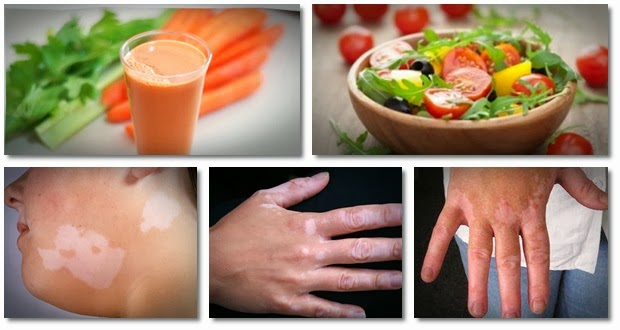
Vitiligo Home Remedies: What Has Evidence, What Is Safe, and What to Skip
People look for vitiligo home remedies for the same reasons they look for any self-care approach: access, cost, or a preference to try gentler options first. These are all reasonable positions. The problem is that most of what appears online is either old folk medicine that has never been tested, or active misinformation that overpromises results.
This guide rates each commonly searched remedy by what the evidence actually shows — not to dismiss the interest, but to help you spend time and money on things that have a plausible basis.
Evidence ratings used here
- Plausible evidence — studied in vitiligo with some positive results, even if small studies
- Indirect evidence — studied in related conditions or mechanisms; reasonable to try
- No clinical evidence — no meaningful trials; may be safe but unproven
- Avoid — evidence of harm, unsafe application, or toxic ingredients at common doses
Ginkgo biloba
Evidence: Plausible
The only traditional remedy with a proper randomised controlled trial in vitiligo. A study found that 40mg ginkgo biloba three times daily slowed vitiligo progression and produced limited repigmentation compared to placebo over 3 months.
The effect is modest — this is not a replacement for phototherapy or prescription treatment — but the evidence is real and the safety profile is good. It is one of the few supplements where the risk-to-benefit ratio favours trying it.
Dose: 40mg standardised extract (24% ginkgosides), three times daily. Allow 3–6 months before evaluating.
Ginkgo biloba for vitiligo — fuller guide
Turmeric (topical with mustard oil)
Evidence: No clinical evidence (topical); Indirect evidence (oral curcumin)
Turmeric contains curcumin, which has documented anti-inflammatory properties. Applied topically in mustard oil — a very common traditional recommendation — no controlled trial has shown it to restore melanin or slow vitiligo.
The turmeric-mustard oil paste is unlikely to cause harm to most people, but the yellow staining is persistent and the evidence for any benefit is absent. Oral curcumin supplements have more plausible mechanisms via anti-inflammatory pathways but no good vitiligo-specific trial data.
If you are interested in trying oral curcumin as a general anti-inflammatory support, turmeric curcumin supplements are the cleaner option versus applying paste to the skin.
Aloe vera (topical)
Evidence: Indirect evidence
Aloe vera has documented wound-healing and anti-inflammatory properties and is widely recommended in skin conditions. For vitiligo specifically, there is no good clinical trial. Some animal studies suggest polysaccharides in aloe may support melanocyte activity, but this has not translated to human trial data.
Topical aloe vera is safe, non-irritating for most people, and a reasonable choice as a moisturiser or soothing application around active vitiligo borders. It will not repigment patches, but it will not cause harm.
Bakuchiol (Psoralen from Babchi/Bakuchi seeds)
Evidence: Indirect — but this one carries real risk
Babchi seeds (Psorolia corylifolia) contain psoralens — compounds that make skin photosensitive. The conventional medical treatment PUVA (psoralen + UVA light) uses a pharmaceutical-grade psoralen for exactly this reason. Bakuchi-based pastes are a traditional attempt at the same mechanism.
The problem: psoralen concentration in bakuchi seeds is highly variable and uncontrolled. Applied to skin and exposed to sun, the result can be severe blistering, chemical burns, or paradoxical permanent depigmentation of healthy skin. There are documented cases of vitiligo significantly worsened by bakuchi treatments.
Do not use bakuchi seed pastes or extracts on vitiligo skin. If you want to explore photosensitising approaches, this is a conversation to have with a dermatologist using pharmaceutical-grade PUVA.
Black seed oil (Nigella sativa)
Evidence: Plausible (very limited)
One small study using a topical cream containing Nigella sativa found some benefit in vitiligo patches. The study was small and the evidence base is early. Black seed oil has documented antioxidant and immunomodulatory properties that are at least mechanistically relevant to vitiligo.
Low risk, low cost, plausible mechanism — in the category of “reasonable to try as a complement, not as a primary treatment.”
Coconut oil and other carrier oils
Evidence: No clinical evidence
Often recommended as bases for other applications. Coconut oil has antimicrobial properties and is a good skin moisturiser, but it has no specific evidence in vitiligo. Applies similarly to olive oil, castor oil, and other oils commonly mentioned in traditional vitiligo remedies.
Safe to use for moisturising. Not a treatment.
Sun exposure
Evidence: Indirect (but important context)
Controlled sun exposure is often listed as a home remedy. This one is more nuanced than it appears.
Melanocytes are stimulated by UV light, and some repigmentation can occur through incidental sun exposure in early or mild vitiligo. However:
- Unprotected sun exposure on depigmented skin can cause severe burns (no melanin = no UV protection)
- Random sun exposure is far less effective than controlled narrowband UVB phototherapy
- Inconsistent UV can trigger Koebner phenomenon and worsen vitiligo in susceptible people
The right approach to UV in vitiligo is not uncontrolled sun exposure — it is medical-grade phototherapy, ideally with a home UVB lamp, with consistent dosing and appropriate sun protection on non-treatment days.
Remedies to avoid
Bakuchi seed paste — risk of chemical burns and worsened depigmentation (see above).
Bleach or harsh chemical brighteners — not a vitiligo treatment; can damage healthy skin.
Immune boosters (echinacea, high-dose vitamin C as an immune stimulant) — vitiligo is an overactive immune response. Stimulating the immune system is the opposite of helpful. Treatments that work in vitiligo — JAK inhibitors, calcineurin inhibitors, corticosteroids — all suppress immune activity, not enhance it.
Extreme elimination diets — no specific food has been proven to cause vitiligo, and restrictive diets without clinical evidence can cause nutritional deficiencies that worsen the situation.
What I would actually try
If you want a practical home-based complement alongside whatever medical treatment you are pursuing:
- Ginkgo biloba 40mg three times daily — the only traditionally-sourced supplement with a proper trial behind it
- Vitamin D3 + B12 + folic acid — correct known deficiencies; see the vitamins guide
- Stress reduction practices — the stress-vitiligo link is real; see the stress guide
- Consistent moisturisation with a gentle barrier cream — especially important around active patch borders
- Protect patches from sun — broad-spectrum SPF 50+ daily, not just beach days
Daily, not just beach days
EltaMD UV Clear SPF 46
Zinc oxide, no white cast — the daily default for protecting depigmented patches, which have zero natural UV protection.
Check Price on AmazonNone of these will reverse vitiligo on their own. They support the conditions for treatment to work.
Related reading:
