
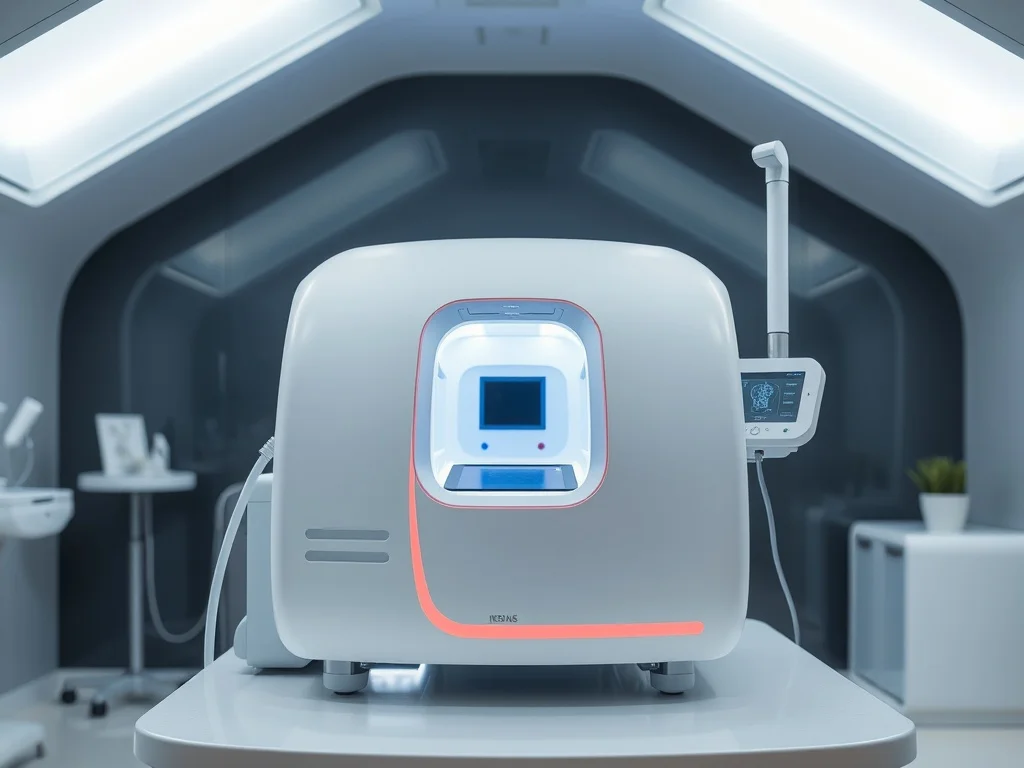
Excimer Laser for Vitiligo: How It Works, Results, and Cost
Excimer laser therapy is a form of targeted narrowband UVB phototherapy that delivers high-intensity ultraviolet light at 308nm — the same therapeutic wavelength as conventional NbUVB lamps — but to a precisely defined treatment area. Instead of exposing the whole body or a large panel area to UV, the excimer laser targets individual patches, delivering an intense dose directly to the affected skin.
For patients with limited or focal vitiligo, this targeted approach offers meaningful advantages over conventional whole-body phototherapy. For patients with extensive disease, it is less practical.
How excimer laser works
The excimer laser uses a xenon-chloride gas mixture that emits light at 308nm — the wavelength optimally absorbed by the skin’s immune cells and melanocytes. At this wavelength, the UV:
- Suppresses local T cell activity — the immune attack on melanocytes is reduced in the treated area
- Stimulates surviving melanocytes in follicular reservoirs to proliferate and migrate into the depigmented area
- Induces apoptosis (programmed death) of the pathogenic T cells attacking melanocytes in the patch
These are the same mechanisms as conventional NbUVB, but delivered at higher fluences (energy per unit area) directly to the target patch. Because normal skin is not treated, higher doses can be applied without the risk of burning surrounding normal skin.
Who is a good candidate for excimer laser?
Excimer laser is best suited for:
Limited, focal vitiligo: Patients with one to five discrete patches affecting a total area of less than 10% of body surface area get the best value from excimer. For widespread disease affecting most of the body, the time per session and the number of patches to treat makes excimer impractical compared to home panel phototherapy.
Facial vitiligo: The face is the highest-priority area for most patients, and excimer laser allows precise targeting without UV exposure to eyes, hairline, or other areas that require protection. Clinical studies of excimer for facial patches show some of the strongest response data available.
Body areas that are hard to treat with home phototherapy: Folds, curves, and anatomically awkward areas that are difficult to position correctly against a flat panel lamp can be accessed more easily with the handheld excimer handpiece.
Patients who cannot attend regular home phototherapy: Because excimer sessions are short (minutes per session) and effective at high doses, some patients achieve adequate response with two sessions per week at a clinic rather than the three-per-week protocol typical of home phototherapy.
Results: what the evidence shows
Excimer laser has a reasonably strong evidence base for vitiligo, accumulated over two decades of clinical use.
Face and neck: Response rates are the strongest in these areas. Multiple studies show greater than 75% repigmentation in facial vitiligo patches in 70–80% of patients after 20–30 sessions. This is among the highest response data available for any non-surgical vitiligo treatment.
Trunk and extremities: Response rates are lower, consistent with what is seen with other phototherapy approaches. Partial responses are common; complete repigmentation in large body patches is less common.
Hands and feet: As with all phototherapy for acral vitiligo, response rates are significantly lower. Excimer offers some advantage over whole-body phototherapy (higher delivered dose per session) but the underlying melanocyte depletion in these areas limits outcomes.
Typically, patients require 20–30 sessions to assess response, with sessions twice or three times per week. First signs of repigmentation (perifollicular dots) typically appear after 10–15 sessions.
Excimer laser vs conventional narrowband UVB
Choosing between excimer laser and conventional home NbUVB phototherapy depends on disease extent and access:
| Factor | Excimer Laser | Home NbUVB Panel |
|---|---|---|
| Best for | Limited, focal patches | Widespread disease |
| Dose to target | Higher per session | Lower per session |
| Normal skin exposure | Minimal | Higher |
| Cost per session | High (clinic) | Low (device amortised) |
| Convenience | Clinic appointments | Home treatment |
| Coverage | Targeted | Whole-body or large area |
| Availability | Specialist clinics | Consumer devices |
For patients with limited facial vitiligo who can access a clinic, excimer often produces faster responses than home phototherapy. For patients with extensive involvement who would need many separate excimer treatments per session, home panel phototherapy is more practical.
The narrowband UVB vs excimer laser comparison covers this head-to-head in more detail.
Cost
Excimer laser is a clinic procedure. Costs vary significantly by location:
- In the US, excimer laser sessions typically cost $150–400 per session without insurance. Insurance coverage for vitiligo treatment varies widely; some plans cover phototherapy, others do not.
- In the UK, excimer laser is available in some NHS dermatology centres, but waiting times and availability are variable. Private clinics charge £100–300 per session.
- Sessions are required twice or three times weekly, so a full course of 30 sessions represents a significant total cost without coverage.
Compare this to home phototherapy: a quality home NbUVB panel costs $500–1500 upfront but has minimal ongoing cost per session. For patients who will need long-term phototherapy, home devices often become cost-effective within three to six months compared to clinic-based excimer.
Combination with topicals
Excimer laser combined with topical tacrolimus or Opzelura shows better outcomes than excimer alone. The topical provides ongoing immunosuppression between sessions; the excimer provides the phototherapy stimulus at each visit. This combination is increasingly the standard approach in clinics that offer excimer.
The vitiligo treatment options comparison gives context on where excimer fits in the full treatment landscape and helps compare approaches for patients deciding how to proceed.
