
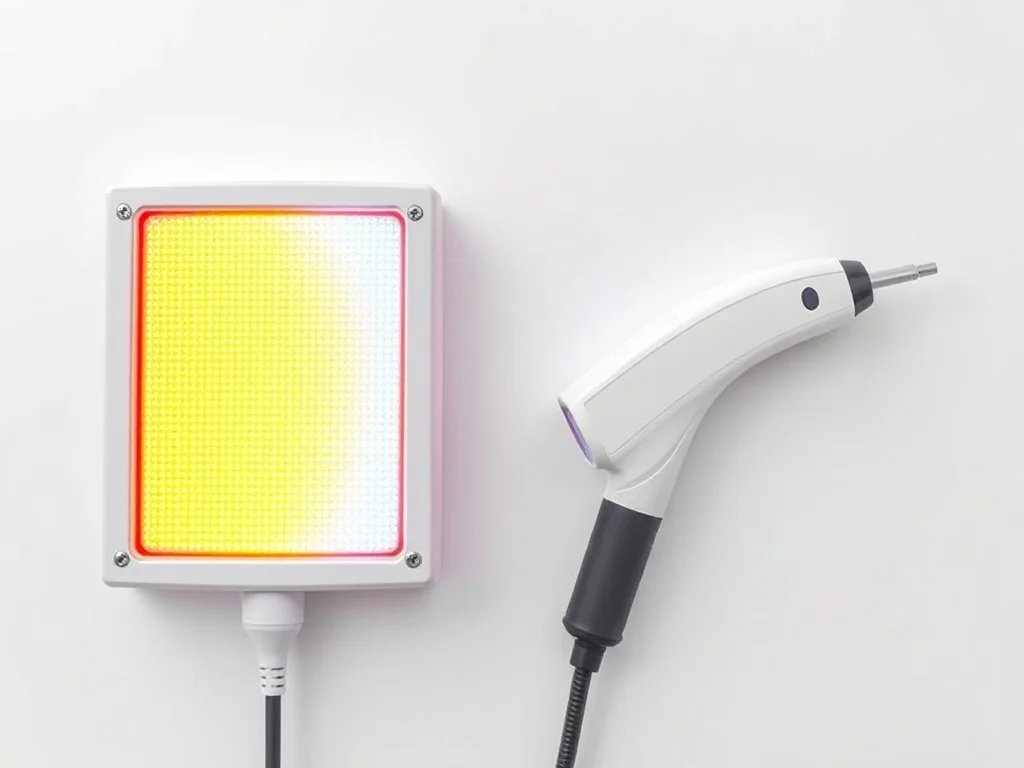
Narrowband UVB vs Excimer Laser: Comparing Two Phototherapy Options
Narrowband UVB (NbUVB) phototherapy and excimer laser therapy share a fundamental property: both deliver ultraviolet light at or near 308nm, the wavelength most effective for stimulating melanocyte activity and suppressing the local autoimmune attack in vitiligo. But the way they deliver that UV, and the practical implications of each approach, are significantly different.
Choosing between them comes down to a few key factors: how much of your body is affected, whether you need clinic-based or home treatment, and what budget is available.
How each technology works
Narrowband UVB: Uses a fluorescent lamp that emits a narrow band of UV light centred around 311nm. Panel-based NbUVB units (wand, panel, or full-body cabinet) expose a large area of skin to the UV at once — making them efficient for treating widespread vitiligo. Home NbUVB units are widely available and increasingly common for vitiligo treatment.
Excimer laser: Uses a xenon-chloride gas mixture to produce a precisely controlled 308nm laser beam delivered through a handheld device. Rather than exposing a large area at once, the excimer handpiece targets a defined spot — typically a few centimetres across — and is moved systematically across each patch. Excimer is exclusively clinic-based equipment (home units do not exist at consumer level).
Both wavelengths are within the therapeutic range and both work through the same mechanisms — immune suppression and melanocyte stimulation. The difference is delivery.
Efficacy comparison
For limited, focal vitiligo: Excimer laser has demonstrated excellent response rates — some studies reporting greater than 70% repigmentation in facial patches after 20–30 sessions. The higher intensity dose it can deliver per unit area (because only the affected patch is exposed, not surrounding normal skin) may explain better results for limited disease.
For widespread vitiligo: Panel NbUVB is far more practical and cost-effective when patches cover multiple body areas. Treating 10 separate patches with an excimer laser handpiece is slow and expensive per visit; a full-body NbUVB cabinet addresses all patches simultaneously.
Face and neck: Both approaches work well in these areas. Excimer may produce faster response for isolated facial patches. NbUVB produces comparable results with consistent use.
Hands and feet: Both are limited by the biology of acral vitiligo — poor melanocyte reserve, thick skin. Neither has a clear advantage here; both show weak response compared to facial vitiligo.
Head-to-head comparison
| Factor | Home NbUVB Panel | Excimer Laser (Clinic) |
|---|---|---|
| Best for | Widespread or multiple patches | Limited, focal patches |
| Treatment area per session | Large (whole body or panel area) | Small (targeted beam) |
| Dose intensity | Moderate (full skin surface) | High (targeted only) |
| Home use | Yes | No |
| Session frequency | 3× per week | 2–3× per week |
| Cost per session | Very low (amortised device cost) | $150–400 (US) / £100–300 (UK) |
| Insurance coverage | Variable | Variable |
| Convenience | Home treatment, no appointments | Clinic visits required |
| Availability | Consumer devices widely available | Specialist dermatology clinics |
The cost argument
For patients with limited insurance coverage, the cost difference is substantial. A home NbUVB device (quality panel lamp appropriate for vitiligo) costs approximately $500–1,500 upfront. After this initial investment, the cost per treatment session is essentially zero — electricity and device maintenance only.
Excimer laser at clinic costs $150–400 per session in the US without coverage. A full course of 30 sessions costs $4,500–12,000 out of pocket. Even with good coverage, copayments accumulate.
For patients with limited or focal vitiligo who need at most 30–40 sessions to achieve adequate response, excimer’s cost may be comparable to device purchase. For patients who will need ongoing or long-term phototherapy, home NbUVB becomes dramatically more cost-effective.
The review of best UV lamps for vitiligo covers home phototherapy equipment options.
When to choose excimer
- Limited vitiligo (fewer than five discrete patches, less than 10% body surface area)
- Patches in anatomically awkward areas that are hard to position against a home lamp
- Patients who want the fastest possible response for high-priority areas (particularly face)
- Those unable or unwilling to manage home phototherapy equipment
- When an excimer clinic is accessible and cost is not a limiting factor
When to choose home NbUVB
- Widespread or multiple-patch vitiligo where excimer would require many targeted treatments per session
- Long-term treatment anticipated (maintenance phase after active treatment)
- Cost is a significant factor
- Clinic access is limited (geography, transport, time)
- Willingness to self-manage treatment at home
Combining both
Some patients use both: clinic-based excimer for high-priority areas (face) where they want maximum dose and focused treatment, alongside home NbUVB for body patches. This combination is perfectly reasonable if cost is manageable.
Both can also be combined with topical treatments — Opzelura or tacrolimus alongside phototherapy improves outcomes over either alone. The narrowband UVB at home guide covers home phototherapy protocols, and the excimer laser guide covers the clinic-based approach. The vitiligo treatment options comparison situates both within the full treatment landscape.
