
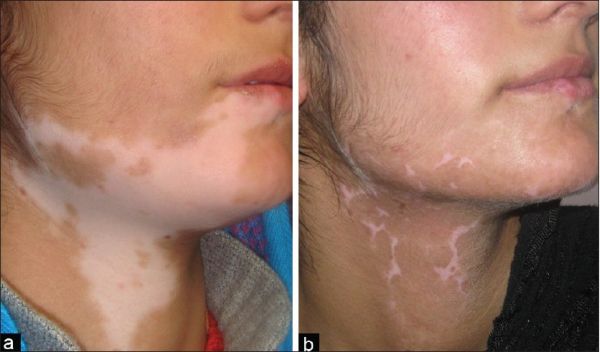
Skin Care for Vitiligo: The Complete Routine for Sun Protection, Barrier Support, and Coverage
Vitiligo skin care is not about chasing special ingredients. It is about understanding what depigmented skin is missing — and building a routine that compensates for those gaps while supporting whatever treatment you are using.
Melanin does three things that vitiligo patches no longer do well:
- Absorbs UV radiation — preventing sunburn and UV-driven DNA damage
- Scavenges free radicals — protecting cells from oxidative stress
- Provides a natural “do not attack” signal — melanocytes in normal skin help regulate local immune tone
Without melanin, depigmented skin burns faster, accumulates oxidative damage more quickly, and is more vulnerable to the Koebner phenomenon — where physical trauma to the skin triggers new vitiligo lesions.
A good vitiligo skin care routine addresses all of this. Here is how to build one.
1. Sun protection — the single most important step
Why vitiligo patches need SPF 50, not just SPF 30
Dermatology guidelines generally recommend SPF 30 for healthy skin. For vitiligo patches, the standard recommendation is higher — SPF 50 minimum on exposed depigmented areas.
The reason is math. Depigmented patches already have zero melanin-based UV protection. SPF 50 blocks 98% of UVB; SPF 30 blocks 97%. That 1% difference sounds small, but it represents roughly double the UV transmission at the skin level — and when you are starting with no melanin buffer, that matters.
More practically: most people apply one-quarter to one-half of the amount needed to achieve the labelled SPF. At half-application, your SPF 50 delivers roughly SPF 7. Using SPF 50 and applying it correctly gets you closer to real-world SPF 20–25 — already more protective than SPF 30 under-applied.
Apply generously. A full face application should feel like slightly too much.
Mineral vs chemical: which to use on vitiligo skin
Mineral sunscreens (zinc oxide, titanium dioxide) are the preferred choice for most vitiligo patients for several reasons:
- Zinc oxide is broad-spectrum (covers both UVA and UVB well) from a single ingredient
- Less likely to irritate reactive or post-treatment skin
- No systemic absorption concerns — important if you are pregnant or using immunosuppressive topicals
- Zinc oxide has mild anti-inflammatory properties
Chemical sunscreens (avobenzone, octinoxate, etc.) can be appropriate for stable, non-reactive vitiligo skin if they are tolerated. The main concern with chemical filters is potential irritation around areas being treated with calcineurin inhibitors or ruxolitinib, where the skin barrier may already be mildly compromised.
Avoid oxybenzone on vitiligo skin specifically — it is a known skin sensitizer, is detected systemically after topical application, and is best replaced with a zinc oxide formula. For pregnancy, see the full sunscreen in pregnancy guide.
Reapplication
SPF degrades with UV exposure, sweating, and friction. Reapply every 2 hours outdoors. For daily commuting or largely indoor days, morning application is usually sufficient.
UPF clothing — the underused tool
For large-area vitiligo on the arms, legs, or trunk, UPF 50+ clothing is as protective as sunscreen and requires no reapplication. Sun-protective long-sleeved shirts and pants, now available in lightweight and breathable fabrics, are worth investing in if you spend time outdoors.
For the face and hands, sunscreen remains necessary. For body patches under clothing, UPF fabric is often more practical.
Daily facial sunscreen
EltaMD UV Clear SPF 46
Zinc oxide, non-comedogenic, no white cast, and contains niacinamide for barrier support — a reasonable daily default.
Check Price on AmazonFull review with more options: Best Sunscreen for Vitiligo →
2. The Koebner phenomenon — what skin care habits trigger new patches
The Koebner phenomenon describes the appearance of new vitiligo lesions at sites of skin trauma. Estimates suggest 20–50% of vitiligo patients are Koebner-positive. Understanding this shapes how you approach your entire skin care routine.
Skin care habits that can trigger Koebner:
| Habit | Risk | Better alternative |
|---|---|---|
| Harsh physical exfoliation (scrubs, loofahs) | High friction on existing/adjacent skin | Gentle chemical exfoliation or washcloth at most |
| Tight clothing with chronic friction | Repeated mechanical trauma | Seamless, non-binding fabrics on affected areas |
| Sunburn on or near patches | UV trauma | SPF 50 + reapplication |
| Waxing over vitiligo patches | Trauma + inflammation | Shaving, laser (away from patches), or trimming |
| Vigorous rubbing to dry skin | Mechanical trauma | Pat dry gently |
| Harsh cleansers that disrupt barrier | Inflammatory signal | Gentle, pH-balanced cleansers |
The goal is not to treat your skin as fragile — it is to eliminate unnecessary trauma that provides no benefit while carrying Koebner risk.
3. Barrier support — moisturizer and why it matters more than you think
Intact skin barrier does more than prevent dryness. A functioning barrier:
- Reduces transepidermal water loss (TEWL)
- Limits penetration of environmental irritants and allergens that could trigger inflammation
- Makes active treatment (tacrolimus, ruxolitinib, steroids) better tolerated
- Reduces the micro-trauma and dryness that can amplify Koebner risk
Vitiligo patches are often subtly drier than surrounding skin, and treatment cycles — especially with topical calcineurin inhibitors and steroids — can further compromise the barrier temporarily.
What to look for in a moisturizer
The most evidence-supported barrier ingredients:
- Ceramides — the primary lipids in the skin barrier; restore and maintain barrier integrity
- Glycerin — humectant; draws water into the skin
- Hyaluronic acid — humectant; effective at lower concentrations
- Petrolatum — the most effective occlusive available; particularly useful on very dry or cracked skin
Fragrance-free is non-negotiable when you are using any prescription topical. Fragrance is the leading cause of contact dermatitis, and inflamed skin from a reaction is both uncomfortable and a potential Koebner trigger.
When to apply
- Apply moisturizer before active topicals (tacrolimus, ruxolitinib, corticosteroids) to provide a base layer, OR
- Apply after prescription topicals once absorbed if your dermatologist advises (protocols vary — ask)
- Apply after phototherapy sessions to support recovery
- Apply on hands after washing — hands are washed frequently, which strips barrier lipids repeatedly
Area-specific moisturizer tips
Hands: Use a heavier occlusive moisturizer (petrolatum-based) at night and cover with cotton gloves to allow deeper penetration. This is particularly useful if you are treating hand patches with ruxolitinib cream and want to improve topical penetration through thick palmar skin.
Face: Use a non-comedogenic, lighter moisturizer to avoid pore-clogging. CeraVe AM Facial Moisturizing Lotion (contains SPF) is a useful two-in-one for morning.
Body: CeraVe Moisturizing Cream is the most consistent dermatologist recommendation — ceramide-rich, fragrance-free, affordable enough to apply generously. Use it on all affected areas after bathing.
Most consistent dermatologist pick
CeraVe Moisturizing Cream
Ceramide-rich and fragrance-free, affordable enough to apply generously across all affected areas after bathing.
Check Price on AmazonFull moisturizer review: Best Moisturizer for Vitiligo →
4. How to layer skin care with prescription treatments
This is where a lot of people go wrong — either overloading the skin with too many actives, or applying products in an order that reduces prescription efficacy.
Timing around phototherapy
If you are using home NbUVB:
- Apply moisturizer before sessions only if using a light, non-occlusive formula — heavy creams and ointments scatter UV and reduce effective dose delivery
- Apply all topicals (tacrolimus, ruxolitinib, calcipotriol) after phototherapy sessions
- Apply sunscreen on treated skin for any outdoor exposure on treatment days
Ingredients to avoid while on prescription topicals
| Ingredient | Reason to avoid alongside topical immunomodulators |
|---|---|
| Strong AHAs/BHAs (glycolic, salicylic acid) | Can increase skin permeability and irritation |
| Retinoids (unless prescribed) | Adds irritation, potential interaction |
| Essential oils and fragrance | Irritant and sensitizer risk |
| Vitamin C (high concentration) | Generally fine but can irritate compromised barrier |
| Hydrogen peroxide products | Counterproductive given the H₂O₂ accumulation in vitiligo |
Safe active ingredients alongside vitiligo treatment:
- Niacinamide (anti-inflammatory, barrier-supportive — present in EltaMD UV Clear)
- Hyaluronic acid
- Panthenol (provitamin B5)
- Ceramides
Layering order (general guidance)
Morning:
- Gentle cleanser (or water rinse)
- Light moisturizer if needed
- Prescription topical (if morning application)
- Sunscreen (always last)
Evening:
- Gentle cleanser — remove sunscreen/makeup thoroughly
- Prescription topical on patches
- Moisturizer to seal and support overnight
5. Area-specific routines
Face
- Use non-comedogenic products around the nose, chin, and forehead
- Tinted mineral sunscreen doubles as light coverage and blends the contrast at the patch borders
- Around the eyes: use only calcineurin inhibitor topicals (not steroids); apply sunscreen up to — but not in — the eye area; wear UV-blocking sunglasses outdoors
- Cleanse gently — no scrubs, no hot water, no aggressive towel drying
Scalp
- Fragrance-free, sulfate-free shampoo to avoid scalp irritation
- If using a NbUVB scalp comb, do not apply heavy oils before treatment sessions — they reduce UV delivery
- For visible scalp patches, some patients use tinted dry shampoo or scalp concealers (like Toppik or similar) for coverage
Hands
- Apply sunscreen to the backs of the hands every morning — this is the most commonly forgotten area
- After washing, apply a light non-greasy hand cream to restore barrier
- At night: heavier emollient plus cotton gloves if actively treating with topicals
- Avoid harsh soaps; use mild, fragrance-free hand wash
Body patches
- After showering, pat dry (do not rub) and apply moisturizer while skin is still slightly damp — this improves barrier retention
- Consider UPF clothing rather than applying sunscreen to large body-surface areas daily
- If treating with ruxolitinib across limited patches, do not exceed 10% body surface area per application as per prescribing guidelines
6. Coverage — a valid, practical part of the routine
Cosmetic coverage is not about hiding. It is a tool that some patients find useful on specific occasions or daily, and quality coverage products for vitiligo work well when chosen correctly.
For the face:
- Tinted mineral sunscreen provides light coverage and SPF simultaneously — useful for daily low-contrast situations
- Foundation matched to your skin tone applied over sunscreen provides more coverage for events or photos
- Full review: Best Concealer for Vitiligo →
For the body:
Most widely used body coverage
Dermablend Leg & Body Makeup
Covers stark white patches in one or two layers and sets transfer-resistant with setting powder — the standard reference for body coverage.
Check Price on Amazon- Self-tanner on patches can reduce contrast without requiring daily coverage application — results vary, and patch tests are essential before full application
Removal: Use a gentle cleansing oil or micellar water to remove body coverage without aggressive scrubbing. Fragrance-free micellar water on a cotton pad avoids the friction of scrubbing and reduces Koebner risk during makeup removal.
The simple routine framework
For anyone starting from scratch:
Morning
- Rinse or gentle cleanse
- Light moisturizer (if needed before sunscreen)
- Prescription topical on patches
- Sunscreen SPF 50 on all exposed skin — face, hands, any visible patches
Evening
- Cleanse thoroughly — remove sunscreen and makeup
- Prescription topical on patches
- Moisturizer on all dry or treated areas
- Heavy hand cream + cotton gloves if treating hands overnight
That covers sun protection, barrier support, and treatment delivery. Everything else — additional actives, coverage, UPF clothing — builds on this base.
Beth’s take
The basics of vitiligo skin care are straightforward but not automatically obvious. Sun protection at SPF 50, applied generously and daily, is the most impactful single step — it reduces UV damage, limits Koebner triggers, and protects repigmenting patches as they develop color.
Barrier support with a fragrance-free ceramide moisturizer keeps treatment-stressed skin comfortable and makes active prescriptions more tolerable. And understanding the Koebner phenomenon changes small daily habits — from how you dry your skin to what fabrics you wear — in ways that reduce new patch triggers.
Coverage is a valid, practical tool that some patients use daily and others save for events. Neither choice is wrong.
For deeper reading on the specific areas covered here:
