
Vitiligo on Hands and Fingers: Treatment Guide
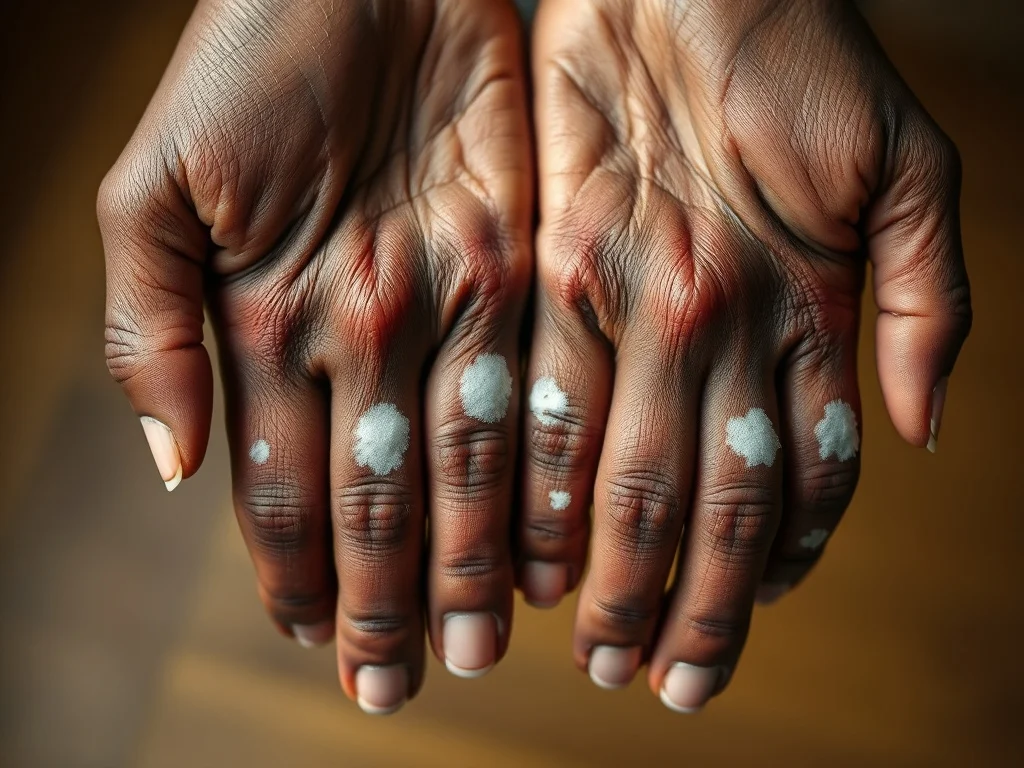
Vitiligo on the hands and fingers is among the most commonly reported locations in patient surveys — and among the least responsive to treatment. The combination of high visibility and poor treatment response makes hand vitiligo one of the more difficult presentations to manage, and understanding why helps set appropriate expectations and choose the right approach.
Why hands and fingers are treatment-resistant
The underlying reason is melanocyte biology. Repigmentation depends on surviving melanocytes — primarily those in hair follicles — migrating into the depigmented area and beginning to produce pigment again. The hands and fingers have several features that limit this process:
Low follicular density: The dorsal (back) surface of the hands, and especially the fingers, has relatively few hair follicles compared to the face or trunk. Fewer follicles means a smaller melanocyte reservoir from which repigmentation can draw.
Acral skin characteristics: Acral skin (hands, feet, and digits) has different properties than skin elsewhere. It tends to be thicker, has different turnover patterns, and the melanocytes that are present may be less responsive to the phototherapy stimulation that works well on other body areas.
Constant UV exposure: The hands receive significant cumulative UV exposure during normal daily activity. This may contribute to why vitiligo in this area is often more stable in terms of spread — but it also means the therapeutic window for controlled UVB treatment is narrower.
Low response rate in trials: Clinical trial data consistently shows hands and feet as the poorest-responding body areas. The TRuE-V trials for Opzelura showed meaningful facial responses but substantially lower responses on hands and feet. Similarly, narrowband UVB phototherapy shows much weaker response on acral sites than on the face or trunk.
Which treatments are worth trying
Despite the difficult prognosis, hand vitiligo is not untreatable — it is treatment-resistant, which means partial responses are common even if complete repigmentation is rare.
Phototherapy
NbUVB phototherapy is still the cornerstone of hand vitiligo treatment, despite lower response rates. Consistent treatment over a long period — 12 to 18 months — gives the best chance of any meaningful response. Hands require careful positioning to ensure the dorsal surface, fingers, and webbing between fingers all receive adequate exposure.
Excimer laser therapy — targeted UVB — may produce better outcomes than panel phototherapy for the hands, because the high-intensity focused beam can deliver a more concentrated dose to specific patches. Clinic-based excimer treatment for hand vitiligo is worth considering if accessible.
Opzelura has a specific discussion of its evidence for hands and feet — the outcomes are weaker than for the face but not zero. Some patients with dorsal hand vitiligo achieve partial repigmentation with consistent application. The hands are within the approved treatment area, but realistic expectations should be lower than for facial vitiligo.
Tacrolimus on hands
Tacrolimus has weaker evidence for hand vitiligo than for facial vitiligo. The thicker acral skin may reduce penetration. It is still sometimes used, particularly in combination with phototherapy, but response rates are lower than elsewhere.
Combination approaches
Topical treatment combined with phototherapy outperforms either alone. For hand vitiligo, this combination — typically Opzelura or tacrolimus twice daily plus NbUVB three times weekly — represents the best available non-surgical option.
Surgical approaches
For stable hand vitiligo — no new spread or change for at least six to twelve months — surgical melanocyte transplantation is an option. Melanocyte-keratinocyte transplant procedure (MKTP) and suction blister grafting have been used for hand vitiligo with variable results. Stability is the prerequisite: surgical grafting into actively changing vitiligo does not hold well.
Surgical options are most relevant for limited, well-defined hand patches rather than extensive involvement across multiple fingers and the full dorsal hand surface.
Koebner risk on hands
The hands are particularly prone to the Koebner phenomenon — new vitiligo triggered by skin trauma. The hands sustain cuts, abrasions, contact with irritants, and friction damage regularly in everyday life. Patients with active hand vitiligo should:
- Use gloves for household cleaning, gardening, and other abrasive tasks
- Treat cuts and abrasions promptly and protect healing skin
- Avoid irritating hand products during active disease phases
Appearance management
While treatment progresses (slowly), camouflage options for hands are limited by practical constraints — the hands wash frequently, contact food and other surfaces, and most cosmetic products are not durable enough for hand use.
Vitiligo skin dyes — semi-permanent dyes applied to depigmented skin — last longer than standard cosmetic products and are better suited to hand use than foundation or concealer. They require skill to apply convincingly but can reduce contrast meaningfully.
Self-tanner applied carefully to dorsal hand patches can reduce the stark contrast, though as discussed in the self-tanner guide, colour matching is imperfect on depigmented skin.
Sun protection is particularly important for hand patches — depigmented skin on the hands receives substantial UV exposure from everyday activities. SPF 50+ applied daily to all depigmented areas reduces burn risk and prevents Koebner from sunburn. The sun protection guide covers options practical for hand application.
What to realistically expect
Hand vitiligo is the honest counterpoint to the encouraging results seen in facial vitiligo trials. Setting realistic expectations:
- Partial response (some perifollicular repigmentation in patches, colour returning to part of the affected area) is achievable in a meaningful proportion of patients with consistent treatment
- Complete repigmentation of extensive dorsal hand and finger vitiligo is uncommon and unlikely without surgical intervention
- Stability — halting new spread — is a realistic and valuable treatment goal even when repigmentation is incomplete
- Response, if it occurs, will take longer than facial vitiligo — expect at least 12 months of consistent treatment before meaningful assessment
See the vitiligo treatment by body area guide for context on how hands compare to other sites, and the vitiligo treatment options comparison for a full overview of available approaches.
